5 Chair Exercises That Restore Knee Strength Faster Than Squats After 60
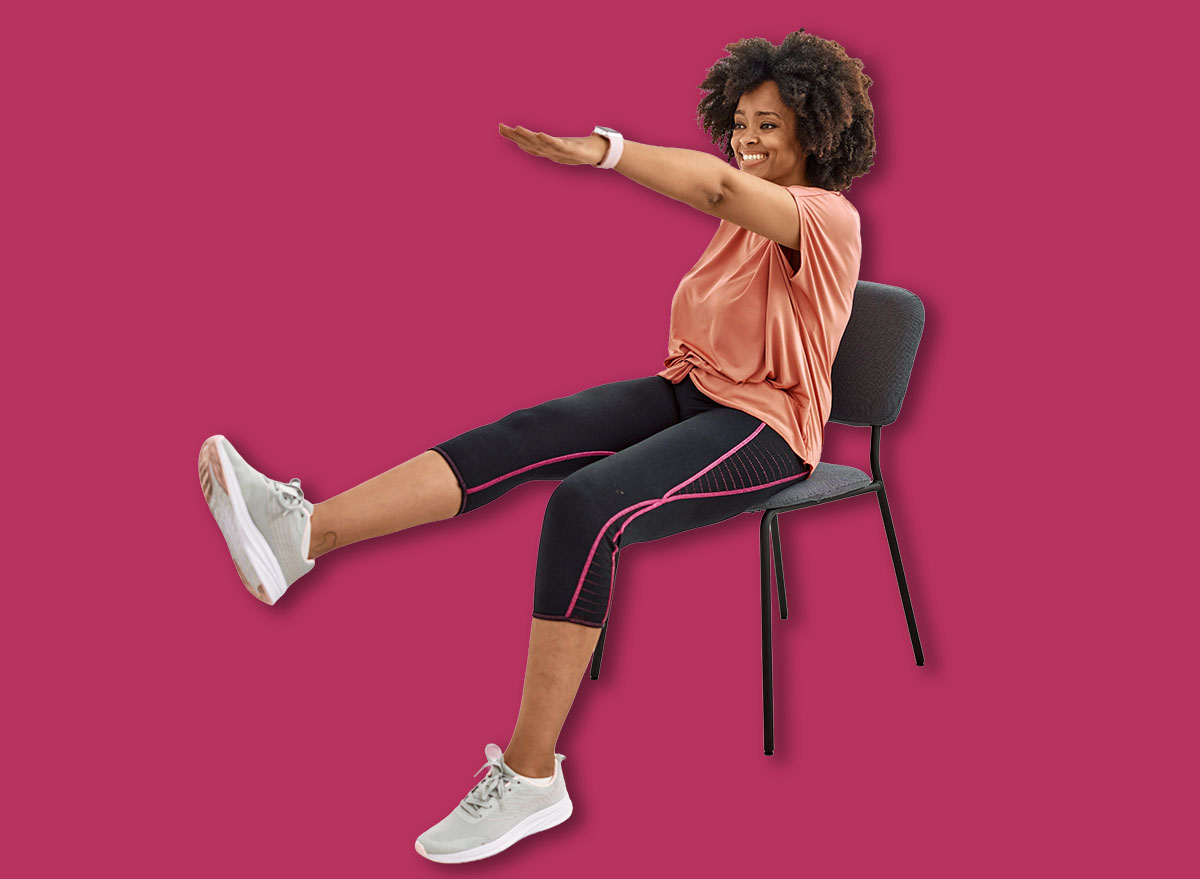

Knee strength after 60 gets better when the muscles around the joint start pulling their weight again. Your quads help control bending and standing; your hamstrings support the back of the knee; your glutes keep your hips steady; and your calves help with walking, stairs, and balance. When those areas get stronger, your knees usually feel more supported during the movements you use every day.
Squats are valuable, but they can feel like a big ask if your knees are stiff, your balance is off, or your lower-body strength needs rebuilding. Chair exercises offer a more accessible way to train the same support system. The chair adds structure, helps you control depth, and gives you a little confidence while your legs do the actual work.
I like chair-based knee work because it lets people train with more intention instead of guessing their way through reps. You can slow down, feel where the work is happening, and build strength without turning every set into a test of balance. The five exercises below target your quads, hamstrings, glutes, calves, and core to support stronger, steadier knees.
Sit-to-Stands
Sit-to-stands train your quads, glutes, hamstrings, and core while practicing one of the most important daily movements after 60. Every rep asks your legs to generate force from a seated position, which carries directly over into getting off the couch, getting out of the car, or rising from the dinner table. Compared with regular squats, chair squats give you a clear target and make the movement easier to control. Press through your feet, stand tall, and lower with purpose instead of dropping back into the seat.
Muscles Trained: Quadriceps, glutes, hamstrings, core.
How to Do It:
- Sit near the front edge of a sturdy chair.
- Place your feet flat on the floor, about hip-width apart.
- Brace your core and lean your torso slightly forward.
- Press through your feet to stand tall.
- Squeeze your glutes at the top.
- Lower back to the chair with control.
Recommended Sets and Reps: Perform 3 sets of 8 to 12 reps. Rest for 45 seconds between each set.
Best Variations: No hands sit-to-stands, slow tempo sit-to-stands, paused sit-to-stands.
Form Tip: Keep your knees tracking over your toes and control the lowering phase.
Seated Leg Extensions
Seated leg extensions train your quadriceps, which play a major role in supporting the knee. The chair keeps your body stable, so you can focus on straightening the leg and squeezing the front of your thigh. Stronger quads help with stairs, walking, and standing up from seated positions because they help control the knee as it bends and straightens. Move slowly and pause at the top so the muscle does the work instead of swinging your lower leg.
Muscles Trained: Quadriceps, hip flexors.
How to Do It:
- Sit tall near the front edge of a sturdy chair.
- Plant both feet flat on the floor.
- Brace your core and keep your chest lifted.
- Straighten one leg in front of you.
- Squeeze your thigh at the top.
- Lower your foot with control and switch sides.
Recommended Sets and Reps: Perform 3 sets of 10 to 15 reps per leg. Rest for 30 seconds between each set.
Best Variations: Paused leg extensions, ankle weight leg extensions, alternating leg extensions.
Form Tip: Lift with control and avoid kicking your leg up with momentum.
Seated Heel Raises
Seated heel raises target your calves and ankles, which help your knees handle walking and stairs, and support balance. Your calves help control how your lower leg moves, and stronger ankles can make each step feel steadier. This exercise gives you a simple way to strengthen the lower leg without needing to stand the whole time. Press through the balls of your feet, pause at the top, and lower your heels slowly.
Muscles Trained: Calves, ankles, foot stabilizers.
How to Do It:
- Sit tall with your feet flat on the floor.
- Place your knees bent at about 90 degrees.
- Brace your core and keep your posture upright.
- Press through the balls of your feet to lift your heels.
- Pause briefly at the top.
- Lower your heels back to the floor with control.
Recommended Sets and Reps: Perform 3 sets of 12 to 15 reps. Rest for 30 seconds between each set.
Best Variations: Single-leg heel raises, paused heel raises, weighted seated heel raises.
Form Tip: Lift straight up through your big toe, avoiding outward rolling of your ankles.
Chair-Supported Step-Backs
Chair-supported step-backs train your glutes, quads, hamstrings, and core while giving your knees a controlled way to practice stepping. The chair adds balance support, so you can focus on keeping your front knee steady and your weight centered. This movement helps build the control you need to navigate stairs, curbs, and step backward with confidence. Keep the range small at first, then increase it as your legs feel stronger.
Muscles Trained: Glutes, quadriceps, hamstrings, core.
How to Do It:
- Stand behind a sturdy chair and place your hands lightly on the backrest.
- Shift your weight into one foot.
- Step your opposite foot back a short distance.
- Bend your front knee slightly while keeping your torso tall.
- Press through your front foot to return to standing.
- Complete all reps, then switch sides.
Recommended Sets and Reps: Perform 3 sets of 8 to 10 reps per leg. Rest for 45 seconds between each set.
Best Variations: Shorter step-backs, assisted reverse lunges, and slower step-backs.
Form Tip: Use the chair for balance, not to pull yourself back up.
Seated Hamstring Slides
Seated hamstring slides train the back of your thighs, which help support and control the knee from behind. Your hamstrings work as you slide one heel away and pull it back, creating a smooth strength-building motion without needing a machine. This exercise pairs well with leg extensions because it trains the other side of the joint. Move slowly and focus on pulling through the back of your leg.
Muscles Trained: Hamstrings, calves, core.
How to Do It:
- Sit tall near the front edge of a sturdy chair.
- Place one heel on a towel or slider if you’re on a smooth floor.
- Brace your core and keep your posture upright.
- Slide your heel forward until your leg nearly straightens.
- Pull your heel back toward the chair.
- Complete all reps, then switch sides.
Recommended Sets and Reps: Perform 3 sets of 10 to 12 reps per leg. Rest for 30 to 45 seconds between each set.
Best Variations: Bodyweight heel slides, longer range slides, and slower hamstring slides.
Form Tip: Pull your heel back with your hamstring instead of dragging from your hip.
How to Rebuild Knee Strength From a Chair

Chair exercises work well when you treat them like strength training rather than easy filler. The support helps you move with more control, but your legs still need to create tension, own the range, and finish each rep cleanly. Start with the version that feels smooth, then build up with more reps, slower tempo, longer pauses, or light resistance.
- Train both sides of the knee: Leg extensions build your quads, while hamstring slides strengthen the back of your thighs. Stronger support on both sides helps your knees feel steadier.
- Use the chair to control depth: Sit-to-stands give you a clear target, which helps you build strength without guessing how low to go.
- Slow the lowering phase: Controlled lowering teaches your legs to absorb force. That skill matters for stairs, curbs, and sitting down without dropping.
- Keep your feet active: Heel raises strengthen your calves and ankles, which help your knees during walking and balance work.
- Progress in small steps: Add reps, pause longer, use ankle weights, or reduce how much you rely on the chair. Small upgrades help build confidence without overwhelming your joints.
Stronger knees usually come from better support around the joint. Give your quads, hamstrings, calves, glutes, and hips regular practice, and the everyday movements that used to feel shaky can start feeling more controlled.
References
- Park, Soo Yeon et al. “Aging-related changes in knee flexor muscle strength and cross-sectional area.” Medicine vol. 101,42 (2022): e31104. doi:10.1097/MD.0000000000031104
- Klempel, Natalie et al. “The Effect of Chair-Based Exercise on Physical Function in Older Adults: A Systematic Review and Meta-Analysis.” International journal of environmental research and public health vol. 18,4 1902. 16 Feb. 2021, doi:10.3390/ijerph18041902