5 Daily Exercises Men Should Do Each Morning to Build Leg Strength After 60
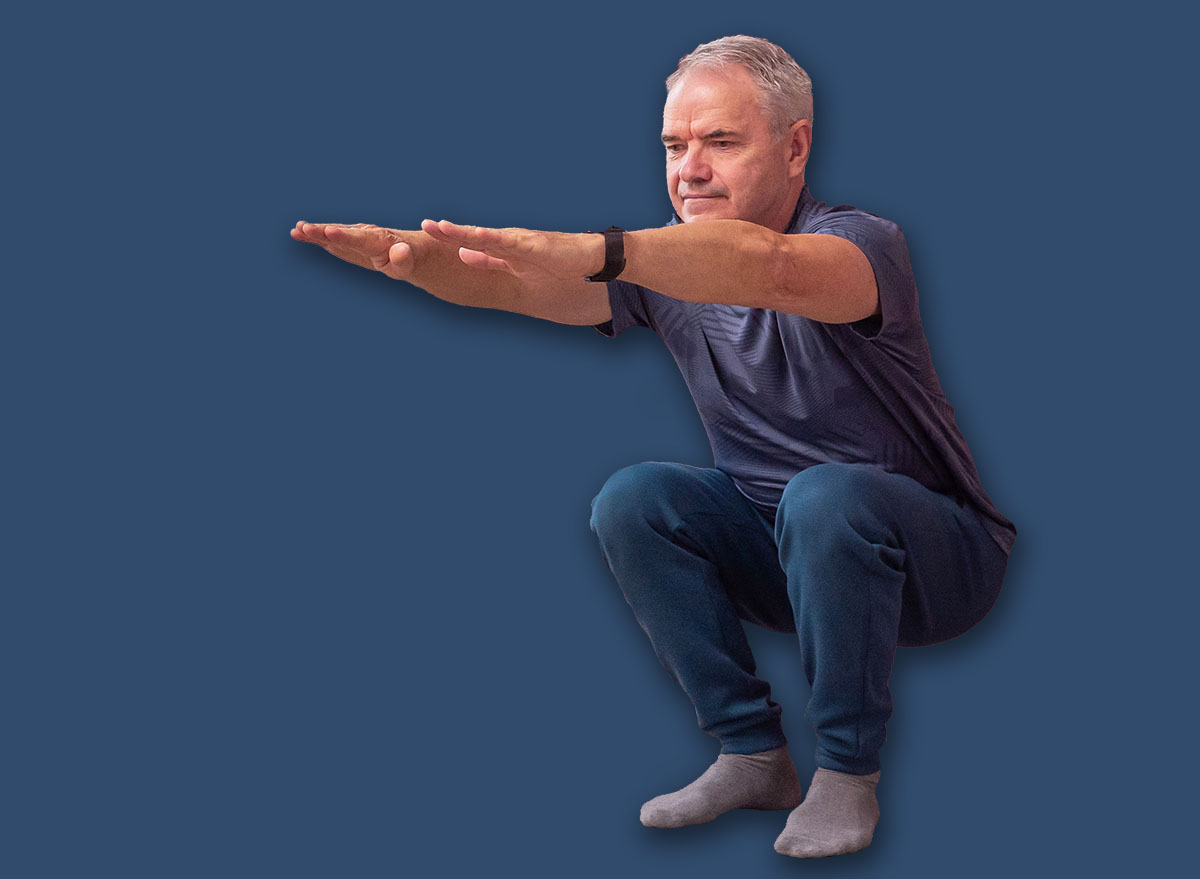

For men over 60, leg strength is one of the first aspects of physical fitness that declines with age. According to the National Institutes of Health, the natural muscle loss that occurs with aging is called sarcopenia, and it speeds up the older you get. And as your strength goes down, daily movements like climbing stairs, getting up from a chair, walking uphill, or carrying groceries can become noticeably more challenging.
The good news? You don’t need an intense gym routine or heavy weights to maintain leg strength later in life. Research shows that consistent functional movement may be one of the best strategies for maintaining lower body strength and mobility after 60. Also, the time of day you workout matters. Studies suggest that morning workouts may be especially helpful for rebuilding leg strength because they help activate muscles after long stretches of inactivity overnight.
To learn more, we chatted with James Brady, CPT, a certified personal trainer at OriGym, who shares his top five daily exercises for men in their 60s to do each morning to build leg strength. The following movements are designed specifically to target the major muscles of your lower body while also improving balance, coordination, and mobility. Read on for the exercises and step-by-step instructions. And when you’re finished, check out these 5 Standing Exercises That Shrink Belly Pooch Faster Than Gym Classes After 60.
Bodyweight Squats
Bodyweight squats are a fundamental movement pattern at any age. Plus, they strengthen your quads, glutes, hamstrings, and core. “Bodyweight squats are one of the most effective morning exercises for building leg strength after 60,” says Brady.
How to do it:
- Stand with your feet shoulder-width apart.
- Keep your chest lifted and your core engaged.
- Push your hips backward as if you’re sitting down in a chair.
- Bend your knees and lower your body with control.
- Keep your weight pressed through your heels.
- Lower until your thighs are parallel to the floor or as far as comfortable.
- Pause for one to two seconds at the bottom.
- Push through your heels to return to the standing position.
- Perform two to three sets of 10 to 15 reps. Rest for 60 to 90 seconds between sets.
Step-ups
“Step-ups are excellent for strengthening the legs in a highly functional way because they mimic climbing stairs and improve stability during everyday movement,” explains Brady.
How to do it:
- Stand in front of a low step or bottom stair.
- Place one foot firmly on the step.
- Brace your core and maintain upright posture.
- Push through your leading leg to lift your body upward.
- Bring your opposite foot up to meet it.
- Step back down slowly with control.
- Focus on using the working leg rather than pushing off the back foot.
- Repeat on the same side before switching legs.
- Complete two to three sets of 10 to 12 reps per leg. Rest for 60 to 90 seconds between sets.
Glute Bridges
“Glute bridges help strengthen the glutes and hamstrings, which are essential for maintaining walking power, posture, and lower body stability as we age,” Brady explains.
How to do it:
- Lie on your back with your knees bent and your feet flat on the floor.
- Position your feet hip-width apart.
- Rest your arms comfortably at your sides.
- Flex your core before beginning the movement.
- Push through your heels to lift your hips upward.
- Raise your hips until your body forms a straight line from shoulders to knees.
- Squeeze your glutes for one to two seconds at the top of the movement.
- Lower your hips back down slowly with control.
- Aim for two to three sets of 12 to 15 reps, resting for 45 to 60 seconds between sets.
Calf Raises
Your calf muscles are crucial for walking efficiency, balance, and lower body stability. “Calf raises are important for improving lower leg strength, balance, and push-off power during walking,” Brady explains.
How to do it:
- Stand tall behind a chair or near a wall for support if needed.
- Position your feet hip-width apart.
- Engage your core and keep your posture upright.
- Slowly raise your heels off the floor.
- Lift as high onto the balls of your feet as comfortable.
- Pause for one to two seconds at the top of the movement.
- Lower your heels back down slowly.
- Perform two to three sets of 15 to 20 reps. Rest for 45 to 60 seconds between sets.
Reverse Lunges
“Reverse lunges are particularly effective for building leg strength because they train the quads, glutes, and hips while placing less stress on the knees than forward lunges,” says Brady. What’s more, the backward stepping motion also challenges balance and coordination.
How to do it:
- Stand tall with your feet hip-width apart.
- Tighten your core and keep your chest upright.
- Step one leg backward into a lunge position.
- Lower until both knees are bent comfortably.
- Keep your front knee aligned over your ankle.
- Maintain upright posture throughout the movement.
- Push through your front heel to return to a standing position.
- Bring your back foot forward to reset.
- Complete two to three sets of 8 to 10 reps per leg, resting for 60 to 90 seconds between sets.