5 Chair Exercises That Trim Belly Overhang Faster Than Gym Sessions After 60
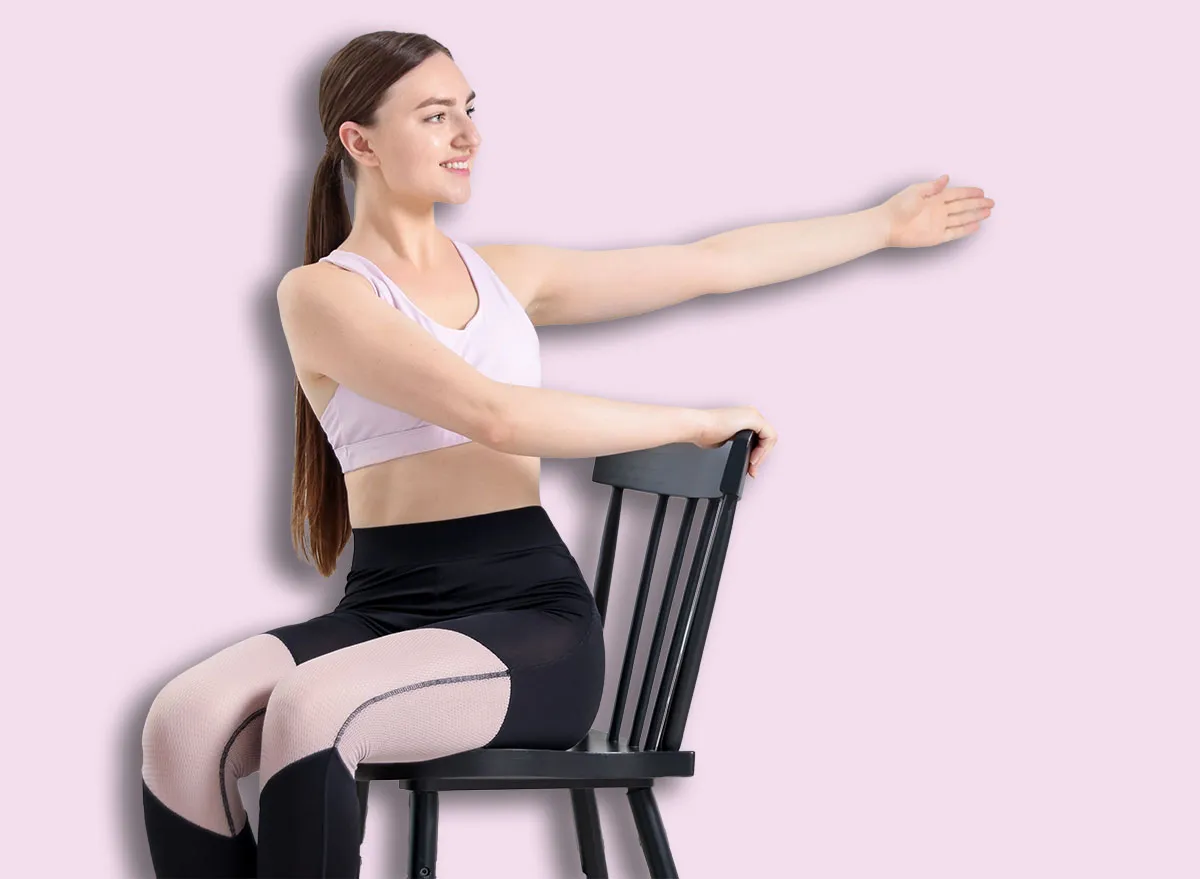

A sturdy chair can turn a small space into a surprisingly effective training station. For trimming belly overhang, the goal is to build muscle, strengthen your midsection, and increase the amount of movement your body can repeat consistently. Chair exercises help because they give you support while still letting your legs, hips, core, and upper body work hard.
I use chair-based exercises with older adults because they make it easier to find good positions. You can sit tall and train your abs, use the chair as a target for squats, press from an incline, or step up with more confidence. That setup lets you focus on clean effort instead of fighting for balance on every rep.
The best chair routine should feel practical, not watered down. Squats, step-ups, push-ups, knee drives, and twists engage larger muscle groups while still giving your core direct attention. Move with control, keep the pace steady, and treat the chair as a tool to help you train harder from the first rep.
Chair Squat
Chair squats train your quads, glutes, hamstrings, hips, and core while giving you a clear target for every rep. Sitting back toward the chair helps you control your depth, and standing tall builds lower-body strength that supports daily movement. This exercise can help trim belly overhang because it engages large muscles, which increases overall effort and supports lean muscle. Keep your chest lifted and make each stand strong.
Muscles Trained: Quadriceps, glutes, hamstrings, hips, core.
How to Do It:
- Stand in front of a sturdy chair with your feet shoulder-width apart.
- Brace your core and keep your chest lifted.
- Push your hips back toward the chair.
- Tap the chair lightly with your hips.
- Press through your feet to stand tall.
- Repeat with smooth, controlled reps.
Recommended Sets and Reps: Perform 3 sets of 10 to 12 reps. Rest for 45 to 60 seconds between each set.
Best Variations: Higher-chair squats, sit-to-stands, and goblet chair squats.
Form Tip: Tap the chair lightly rather than fully relax at the bottom.
Seated Knee Drives
Seated knee drives train your abs, hip flexors, and core control while keeping the setup simple. Each knee lift asks your midsection to stay tall and supported as your leg moves. This gives you direct core work without needing to get on the floor, which makes the movement easier to use consistently. Move slowly enough to keep your torso steady from start to finish.
Muscles Trained: Abs, hip flexors, core.
How to Do It:
- Sit tall near the front edge of a sturdy chair.
- Place your feet flat on the floor.
- Hold the sides of the chair for light support.
- Brace your core and lift one knee toward your chest.
- Lower your foot with control.
- Alternate sides for the full set.
Recommended Sets and Reps: Perform 3 sets of 10 to 12 reps per side. Rest for 30 to 45 seconds between each set.
Best Variations: Slower knee drives, double knee tucks, seated marches.
Form Tip: Keep your chest tall and lift your knee without leaning back.
Incline Chair Push-Up
Incline chair push-ups train your chest, shoulders, triceps, and core. Using the chair elevates your hands, making the movement more approachable while still engaging your upper body to press and your core to brace. This exercise adds upper-body strength to the routine and keeps more of your body involved than seated-only core work. Use a sturdy chair placed against a wall for safety.
Muscles Trained: Chest, shoulders, triceps, core.
How to Do It:
- Place a sturdy chair against a wall.
- Put your hands on the seat or back of the chair.
- Step your feet back until your body forms a straight line.
- Brace your core and squeeze your glutes.
- Lower your chest toward the chair with control.
- Press through your hands to return to the starting position.
Recommended Sets and Reps: Perform 3 sets of 6 to 12 reps. Rest for 45 to 60 seconds between each set.
Best Variations: Wall push-ups, counter push-ups, higher incline push-ups.
Form Tip: Keep your body in one long line and press through your whole hand.
Seated Oblique Twists
Seated oblique twists train your obliques, abs, and deep core muscles. The twisting motion strengthens the sides of your waist while your torso stays tall and controlled. Rotational core strength also supports reaching, turning, carrying, and moving through daily tasks with more confidence. Hold a light dumbbell, water bottle, or no weight at all, depending on your current strength.
Muscles Trained: Obliques, abs, deep core.
How to Do It:
- Sit tall near the front edge of a sturdy chair.
- Hold your hands together or hold a lightweight at your chest.
- Brace your core and keep your feet planted.
- Rotate your torso to one side.
- Return to the center with control.
- Rotate to the other side and continue alternating.
Recommended Sets and Reps: Perform 3 sets of 10 to 12 reps per side. Rest for 30 to 45 seconds between each set.
Best Variations: Bodyweight twists, light dumbbell twists, slower tempo twists.
Form Tip: Rotate through your torso while keeping your hips steady.
Seated Flutter Kicks
Seated flutter kicks train your abs, hip flexors, and deep core while keeping you supported on the chair. The alternating-leg action challenges your midsection to stay braced as your legs move, making it useful for strengthening the lower abdomen. Keep the kicks small at first, sit tall, and control the pace instead of rushing through the set.
Muscles Trained: Abs, hip flexors, deep core.
How to Do It:
- Sit tall near the front edge of a sturdy chair.
- Hold the sides of the chair for support.
- Brace your core and lean back slightly while keeping your chest lifted.
- Extend both legs in front of you.
- Lift one leg slightly as the other lowers.
- Alternate small kicks with steady control.
Recommended Sets and Reps: Perform 3 sets of 15 to 25 seconds. Rest for 30 to 45 seconds between each set.
Best Variations: Bent-knee flutter kicks, slower flutter kicks, single-leg seated kicks.
Form Tip: Keep your torso steady and make the movement come from your lower abs and hips.
How to Trim Belly Overhang With Chair Exercises After 60
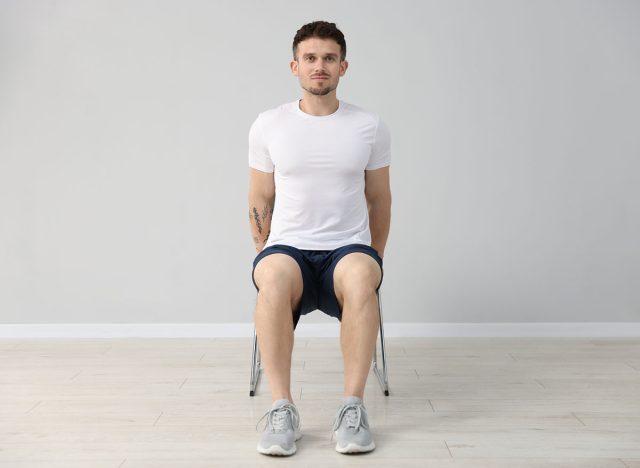
Chair exercises work best when they combine strength, core control, and enough steady movement to raise your daily energy burn. The chair gives you support, but your muscles still need to work with purpose. Use this routine consistently and pair it with daily walking, protein-focused meals, and smart portion sizes to support body composition changes.
- Train large muscle groups: Chair squats, push-ups, and step-ups bring more muscle into the workout. More working muscle creates a stronger training effect.
- Add direct core work: Knee drives and oblique twists help your midsection brace, lift, and rotate with better control.
- Keep the pace steady: Move from one exercise to the next with short rests. A circuit-style approach can raise your heart rate and add a helpful conditioning effect.
- Progress gradually: Add reps, slow the lowering phase, use a light dumbbell, or add another round once the routine feels easier.
- Build daily movement around it: Short walks, extra steps, and active breaks help your workouts show up more clearly over time.
A chair can be more than a support tool. Use it to squat, step, press, twist, and brace, and you’ll build strength, core control, and daily consistency that support a firmer waistline over time.