If You Can Hold a Plank This Long After 60, Your Core Strength Is Stronger Than 90% of Peers
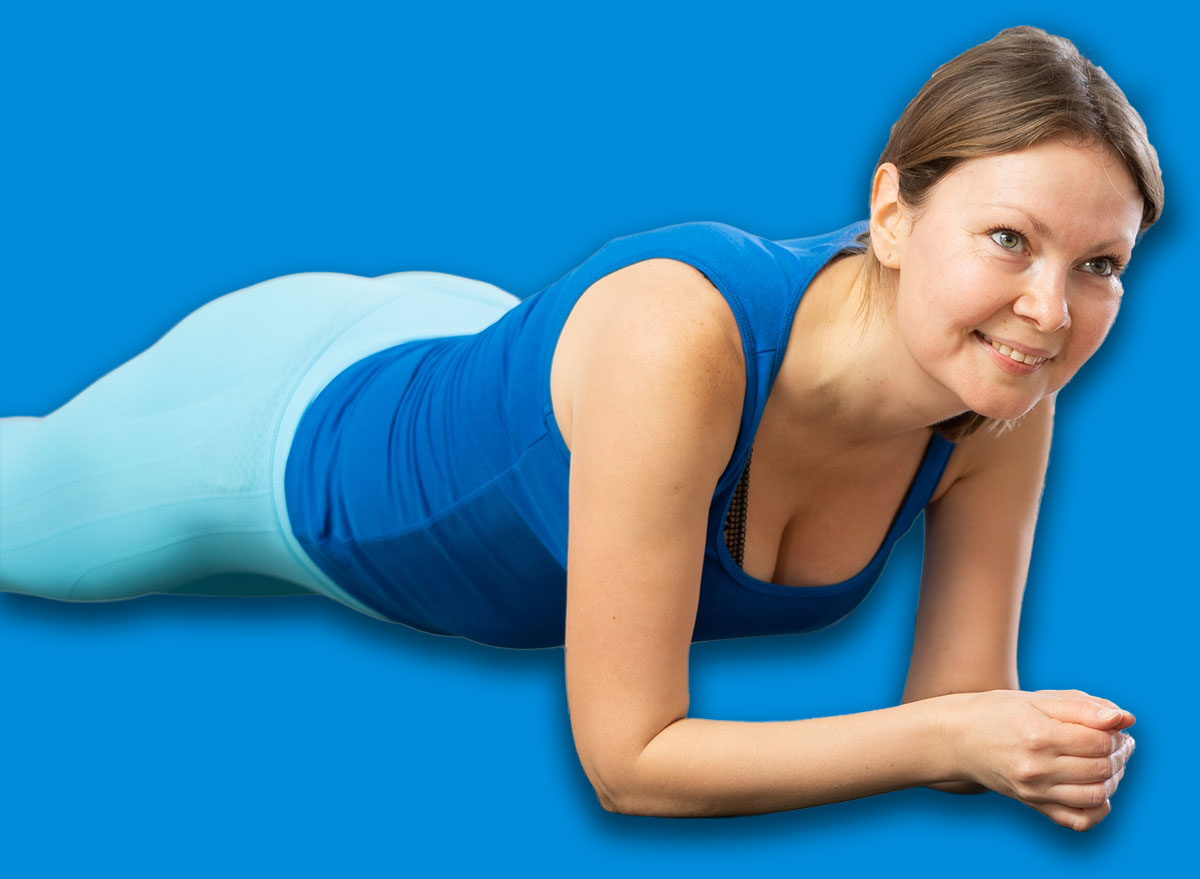
The plank looks simple at first glance, but anyone who has held one with proper form knows how quickly it exposes your true core strength. After 60, the ability to maintain a strong, steady plank reflects far more than abdominal endurance. It shows control, stability, and the kind of foundational strength that supports everything from walking and lifting to staying resilient during everyday movement.
Working with adults across a wide range of fitness levels, I often use the plank as a quick reality check for core capacity. It strips away momentum and forces the body to create full-body tension from head to heels. When someone over 60 can lock into a solid plank and hold it with clean alignment, it usually signals strong trunk stability and well-maintained muscular endurance.
Below, you’ll learn how to perform a technically sound plank, where your hold time ranks compared to others your age, and the smartest ways to build your numbers safely. If you’re ready to see how your core strength stacks up, this test delivers clear answers.
Performing a Perfect Plank
Before worrying about how long you can hold a plank, focus on how well you can hold it. Strong planks come from precise positioning and full-body tension, not just grit. Many people lose valuable training benefits by letting their hips sag or their shoulders drift out of position. Dial in your setup first, then gradually build time. A clean form always beats a longer, sloppy hold.
How to Perform a Perfect Plank
- Place your forearms on the floor, elbows directly under your shoulders.
- Extend your legs behind you and plant your toes firmly into the ground.
- Form a straight line from your head through your hips to your heels.
- Brace your core as if preparing to take a light punch to the stomach.
- Squeeze your glutes and keep your hips level throughout the hold.
- Breathe steadily through your nose while maintaining full-body tension.
Coach Tip: Squeeze your ribcage down to your pantline.
Plank Hold Strength Rankings After 60
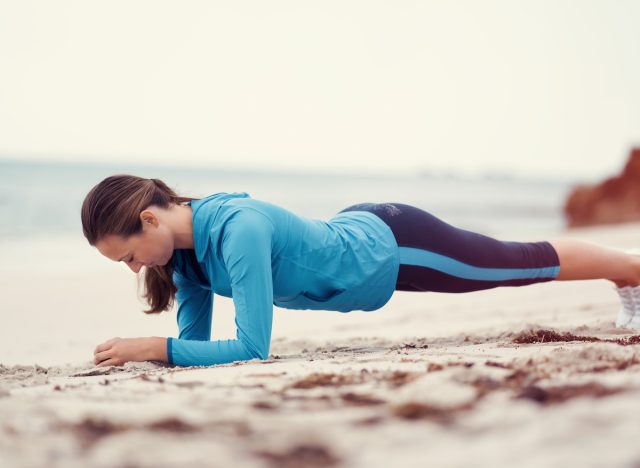
Your plank time offers a clear snapshot of core endurance and trunk stability. These ranges reflect strict front planks performed with proper alignment and no breaks.
Plank Hold Rankings for Adults Age 60 and Older
- Elite: 2 minutes or longer
- Above Average: 90 to 119 seconds
- Average: 60 to 89 seconds
- Below Average: 30 to 59 seconds
- Needs Improvement: Less than 30 seconds
If you’re holding steady in the elite range, your core endurance stands well above most people your age. If your time falls lower, you have a clear target to build toward.
Best Tips to Improve Plank Strength After 60
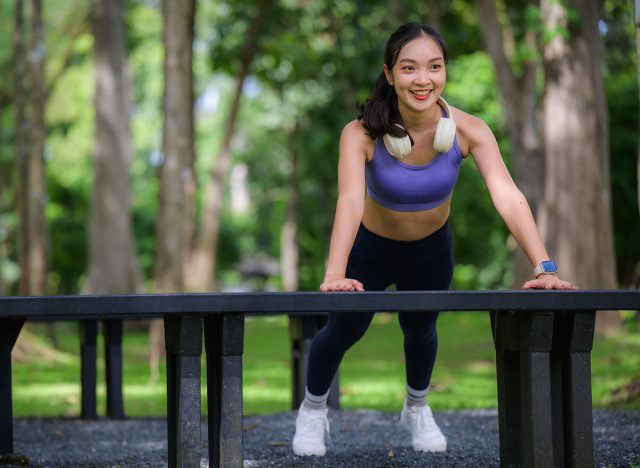
Building a stronger plank comes down to consistency, smart progression, and full-body tension. Many adults over 60 see rapid improvements once they train the core with more intention and structure. I regularly program planks for clients because they build stability that carries over into daily life and strength training. The key lies in practicing quality holds while gradually extending your time under tension. Stay patient and focus on small wins each week. These strategies will help you build a rock-solid plank.
- Practice planks three to four times per week: Frequent exposure builds endurance and reinforces proper positioning.
- Start with shorter, high-quality holds: Multiple sets of 20 to 40 seconds often produce better progress than one long, sloppy attempt.
- Use incline planks if needed: Placing your forearms on a bench or box reduces load while you build baseline strength.
- Strengthen supporting muscles: Add dead bugs, bird dogs, and suitcase carries to improve total core stability.
- Focus on breathing control: Slow nasal breathing helps maintain tension and prevents early fatigue.
- Progress time gradually: Add 5 to 10 seconds per week rather than making large jumps.
- Test your max hold monthly: Regular check-ins help track progress and keep motivation high.
Stay consistent with these habits, and your plank time can climb into the top tier for your age group.
References
- Park, Sihwa et al. “Effects of plank exercise on respiratory capacity, physical fitness, and immunocytes in older adults.” Journal of exercise rehabilitation vol. 19,6 332-338. 26 Dec. 2023, doi:10.12965/jer.2346536.268
- Park, Sang-Kyun et al. “Effects of High Intensity Plank Exercise on Physical Fitness and Immunocyte Function in a Middle-Aged Man: A Case Report.” Medicina (Kaunas, Lithuania) vol. 57,8 845. 20 Aug. 2021, doi:10.3390/medicina57080845