6 Daily Exercises That Regain Muscle Mass Better Than Gym Workouts After 60
Muscle after 60 is built through clear, repeatable strength signals. You need exercises that engage more than one muscle group at a time, challenge your body from head to toe, and carry over into your day-to-day movement. That’s where compound exercises shine.
A great gym workout can help, but daily strength work at home gives you something powerful: consistency. A few well-chosen movements can train your legs, hips, back, chest, shoulders, arms, grip, and core without turning your routine into a long production. The key is choosing exercises that give you a high return on every rep.
For this kind of plan, I’d think less about chasing a perfect workout and more about building a daily strength checklist. Squat or lunge. Hinge. Push. Pull. Carry. Brace. When those patterns show up often, your body gets regular practice producing force, controlling your position, and rebuilding the muscles that keep daily life feeling strong.
Use these six compound exercises as your baseline. Perform them as a full routine, split them into mini sessions, or rotate through a few each day when time is tight. Keep the final reps challenging, choose variations that fit your current level, and let consistency do its job.
Goblet Squat
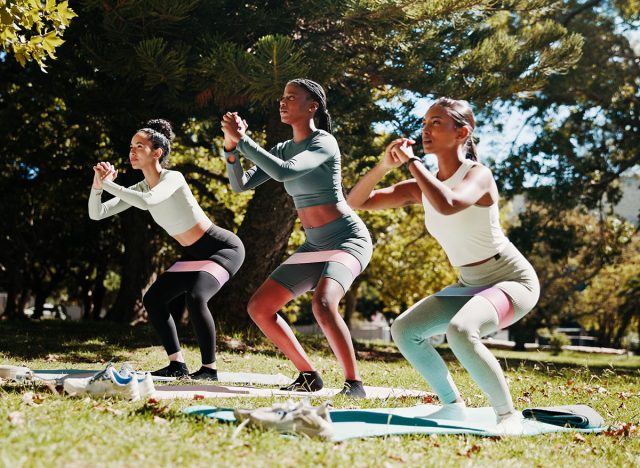
Goblet squats target your quads, glutes, hamstrings, core, and upper back in a single, efficient movement. Holding the weight at your chest gives your trunk a bracing challenge while your legs do most of the work. This makes the goblet squat one of the best compound exercises for rebuilding muscle after 60 because it strengthens the lower body while reinforcing posture and control. Use a dumbbell, kettlebell, or loaded backpack.
Muscles Trained: Quadriceps, glutes, hamstrings, core, upper back.
How to Do It:
- Stand with your feet shoulder-width apart.
- Hold a dumbbell vertically at your chest.
- Brace your core and keep your chest lifted.
- Bend your knees and sit your hips down into a squat.
- Lower until your thighs reach at least parallel, or as low as you can control.
- Press through your feet to stand tall.
Recommended Sets and Reps: Perform 3 sets of 8 to 12 reps. Rest for 60 seconds between each set.
Best Variations: Bodyweight squats, box squats, banded squats, heavier goblet squats.
Form Tip: Keep the weight close to your chest and drive through your whole foot as you stand.
Dumbbell Romanian Deadlift
Dumbbell Romanian deadlifts train your glutes, hamstrings, lower back, core, grip, and upper back. The hinge pattern helps restore muscle tone in the back of your body, which supports lifting, walking, climbing stairs, and standing tall. The lowering phase gives your hamstrings and glutes valuable time under tension, and the return to standing trains hip power. Keep the dumbbells close and move with control.
Muscles Trained: Glutes, hamstrings, lower back, core, grip.
How to Do It:
- Stand with your feet hip-width apart and hold dumbbells in front of your thighs.
- Brace your core and soften your knees.
- Push your hips back as the dumbbells move down your legs.
- Lower until you feel a stretch through your hamstrings.
- Drive your hips forward to return to standing.
- Finish tall with your glutes engaged.
Recommended Sets and Reps: Perform 3 sets of 8 to 10 reps. Rest for 60 seconds between each set.
Best Variations: Kettlebell RDLs, banded good mornings, staggered-stance RDLs, bodyweight hinges.
Form Tip: Let your hips lead the movement and keep your spine long.
Incline Push-Up
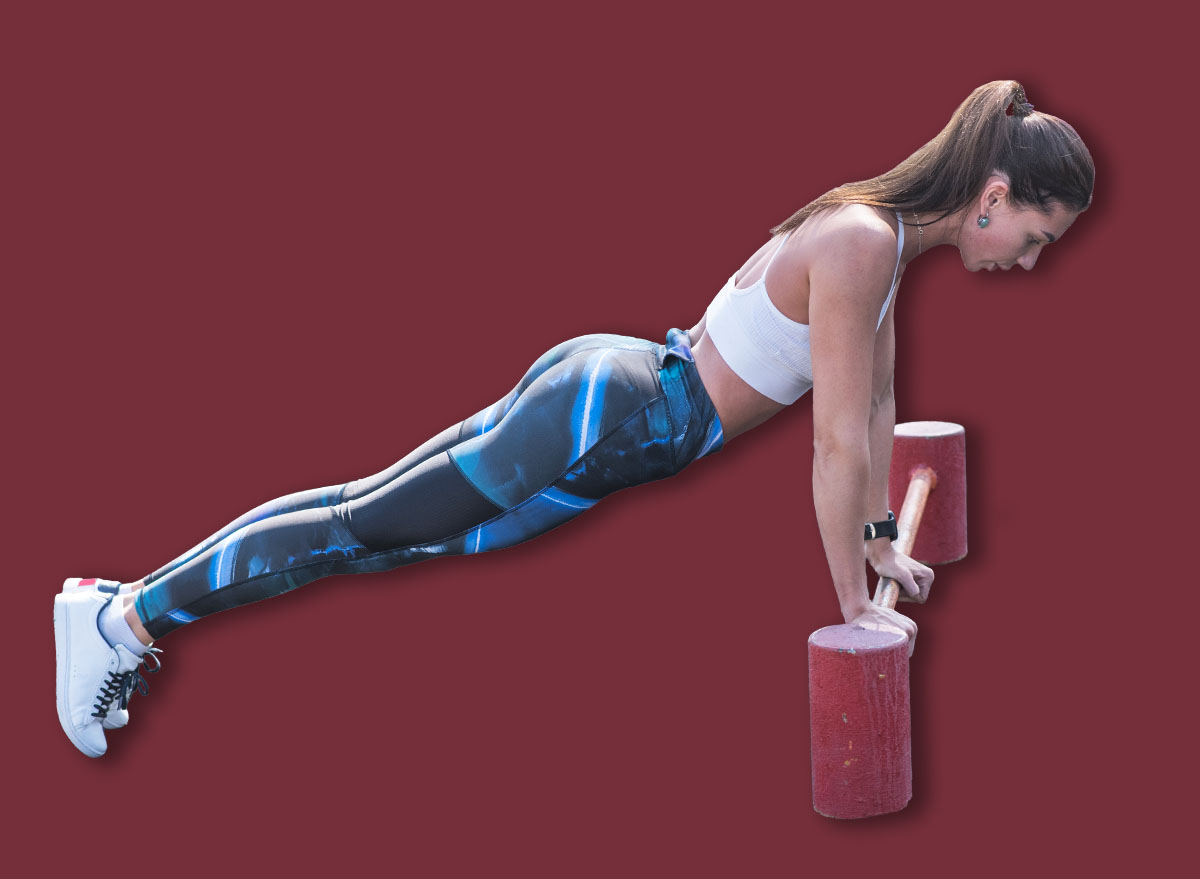
Incline push-ups train your chest, shoulders, triceps, core, and glutes while keeping the movement easy to adjust. A wall, counter, bench, or sturdy table can all work, depending on your current strength. Push-ups are valuable after 60 because they build upper-body pressing strength and teach your body to maintain a strong line. Lower with control and press away with intent.
Muscles Trained: Chest, shoulders, triceps, core, glutes.
How to Do It:
- Place your hands on a counter, bench, or sturdy elevated surface.
- Step your feet back until your body forms a straight line.
- Brace your core and squeeze your glutes.
- Lower your chest toward the surface with control.
- Press through your hands to return to the starting position.
- Repeat while keeping your body aligned.
Recommended Sets and Reps: Perform 3 sets of 8 to 12 reps. Rest for 45 to 60 seconds between each set.
Best Variations: Wall push-ups, counter push-ups, knee push-ups, full push-ups.
Form Tip: Keep your elbows angled slightly back and press through your whole hand.
Dumbbell Bent-Over Row
Dumbbell bent-over rows train your upper back, lats, rear shoulders, biceps, core, grip, and hips. The hinge position keeps your lower body and trunk active while your back and arms do the pulling. This gives you a strong compound exercise to rebuild upper-body muscle and support better posture. Use weights you can row without swinging or standing up between reps.
Muscles Trained: Upper back, lats, rear delts, biceps, core, grip.
How to Do It:
- Stand with your feet hip-width apart and hold a dumbbell in each hand.
- Soften your knees and hinge your hips back.
- Brace your core and keep your spine long.
- Let the dumbbells hang below your shoulders.
- Pull your elbows back toward your ribs.
- Lower the dumbbells with control.
Recommended Sets and Reps: Perform 3 sets of 8 to 12 reps. Rest for 45 to 60 seconds between each set.
Best Variations: Single-arm dumbbell rows, supported dumbbell rows, paused bent-over rows.
Form Tip: Keep your torso steady and pull through your elbows.
Reverse Lunge to Curl
Reverse lunges to curls train your glutes, quads, hamstrings, hips, biceps, grip, and core. The lunge builds lower-body strength and balance, while the curl adds upper-body work without needing another separate exercise. This makes the movement useful for daily muscle building by combining stepping, strength, posture, and arm work into a single compound pattern. Move slowly enough to own each part of the rep.
Muscles Trained: Glutes, quadriceps, hamstrings, biceps, core, grip.
How to Do It:
- Stand tall with a dumbbell in each hand at your sides.
- Brace your core and step one foot back into a reverse lunge.
- Lower your back knee toward the floor with control.
- Curl the dumbbells toward your shoulders as you descend into the lunge.
- Press through your front foot to return to standing.
- Lower the weights and repeat on the other side.
Recommended Sets and Reps: Perform 3 sets of 6 to 8 reps per leg. Rest for 60 seconds between each set.
Best Variations: Bodyweight reverse lunges, goblet reverse lunges, alternating curls, split squats.
Form Tip: Stand fully before curling so each part of the movement stays clean.
Suitcase Carry
Suitcase carries train your grip, core, obliques, shoulders, upper back, glutes, and legs. They’re simple, but they make your whole body work together while you walk with weight on one side. Carries are especially valuable after 60 because they build muscle, posture, balance, and bracing strength at the same time. Use a dumbbell, kettlebell, loaded bag, or any sturdy object you can hold safely.
Muscles Trained: Core, obliques, grip, shoulders, upper back, glutes.
How to Do It:
- Stand tall with a dumbbell or kettlebell beside one foot.
- Hinge down and pick up the weight with one hand.
- Brace your core and stand tall.
- Walk forward with slow, controlled steps.
- Keep your shoulders level and avoid leaning toward the weight.
- Set the weight down safely and switch sides.
Recommended Sets and Reps: Perform 3 carries of 20 to 40 seconds per side. Rest for 45 seconds between each side.
Best Variations: Farmer carries, marching suitcase holds, offset carries.
Form Tip: Walk tall and keep your ribs stacked over your hips.
How to Regain Muscle Mass With Daily Compound Exercises
Compound exercises work well because they train more muscle in less time. Instead of isolating a single area, they ask your body to coordinate strength across multiple joints and muscle groups. That gives you a strong training effect while keeping the routine simple enough to repeat.
- Cover the main patterns: Squat, hinge, push, pull, lunge, and carry. These movements train the biggest muscle groups and support daily strength.
- Keep the final reps challenging: Pick a weight or variation that makes the last two or three reps feel meaningful while maintaining strong form.
- Use short daily sessions: Perform all six exercises for a full workout, or choose three exercises in the morning and three later in the day. Daily consistency builds momentum.
- Progress gradually: Add reps, increase weight, slow the lowering phase, extend carry time, or add another set as the exercises feel easier.
- Support the training: Protein-rich meals, hydration, sleep, and regular walking help your body respond to strength work.
Muscle comes back when your body gets the right signal often enough. Train big movements, challenge the final reps, and keep the routine repeatable so that strength becomes part of your day rather than something saved only for the gym.
References
- Strasser B, Volaklis K, Fuchs D, Burtscher M. Role of Dietary Protein and Muscular Fitness on Longevity and Aging. Aging Dis. 2018 Feb 1;9(1):119-132. doi: 10.14336/AD.2017.0202. PMID: 29392087; PMCID: PMC5772850.
- Gentil P, Soares S, Bottaro M. Single vs. Multi-Joint Resistance Exercises: Effects on Muscle Strength and Hypertrophy. Asian J Sports Med. 2015 Jun;6(2):e24057. doi: 10.5812/asjsm.24057. Epub 2015 Jun 22. PMID: 26446291; PMCID: PMC4592763.