6 Simple Moves That Flatten Belly Overhang Faster Than Cardio After 60

Flattening belly overhang after 60 demands more from your body than long hours on a treadmill. While steady-state cardio burns calories, it often fails to activate the deep core muscles that actually tighten your waistline and support posture. Movement patterns that recruit your core, hips, and stabilizers together are far more effective at reshaping the midsection than repetitive, isolated movements. Research shows that exercise, whether strength-based or functional movement, significantly improves body composition and metabolic health in older adults, supporting deeper fat loss and waist trimming when combined with consistent training.
Studies also highlight that combining strength and aerobic training produces greater reductions in abdominal fat and improvements in physical performance than either modality alone. That means standing moves that fire your core through rotation, balance, and controlled tension deliver visible changes through your waistline faster than treadmill sessions that mainly challenge your legs. These patterns train your nervous system to recruit more muscle fibers at once, boosting calorie use during and after the workout. You’ll drop belly softness while building the strength that makes everyday movement easier and more comfortable.
Every step, twist, and lift you perform upright teaches your body to brace your core and support your spine, which over time flattens the appearance of belly overhang. Unlike machine workouts or floor-only drills that isolate single muscles, standing exercises force your torso to stay stable while your limbs move, deepening activation through your entire midsection. Best of all, these movements require no equipment, just space and attention to form. Give them a try daily, and your waistline will tighten faster than with long cardio sessions alone.
RELATED: 4 Daily Exercises That Rebuild Core Strength Better Than Planks After 50
Standing Cross-Body Knee Pulls
Cross-body knee pulls combine rotation with hip lift to target the obliques and lower abdominals, two areas often ignored by traditional cardio. The combination of knee drive and torso twist forces your core to stabilize against rotational loads, creating deeper contraction through the waistline than forward walking or treadmill jogging alone. Because you remain upright, your posture stays tall and your spine neutral, which lets your core support your abdominal region with every rep. This functional pattern also improves coordination and balance, giving your midsection a tighter, more defined look with consistent practice.
How to Do It
- Stand tall with hands at your temples.
- Lift your right knee toward your left elbow with a controlled twist.
- Return to start and repeat on the opposite side.
- Keep your core tight and spine tall through each rep.
- Continue for 45–60 seconds.
Standing Side Reaches with Hip Shift
Side reaches with hip shift train your obliques and deep core stabilizers through lateral movement that challenges balance and control, something steady-state cardio rarely does. The lateral shift forces your torso to resist rotation while lengthening one side of your midsection and tightening the other, which directly works the muscles that reduce belly overhang and sculpt the waistline. This pattern also improves hip mobility and pelvic stability, making daily movement smoother and more efficient. Over time, the additional core engagement strengthens the muscles that support your midsection even when you’re not exercising.
How to Do It
- Stand with feet hip-width apart and arms extended overhead.
- Lean to one side, reaching your fingers toward your knee while keeping your hips square.
- Return to center, then lean to the other side.
- Keep your abs engaged and spine long.
- Perform for 40–60 seconds.
RELATED: 5 Chair Moves That Smooth Arm Jiggle Before New Year After 45
Walking Plank Walk-Ins (Upright Variation)
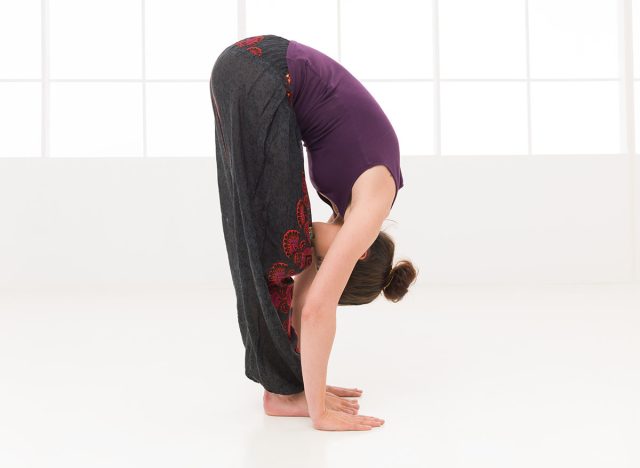
This upright variation mimics the core engagement of a traditional plank while eliminating wrist and neck strain, perfect for 60+ bodies. As you hinge forward, your abs fire to keep your spine stable, and each “walk-in” back to standing requires your core to maintain tension as you lift through your hips. That sustained engagement turns each step into a core challenge that torches calories while strengthening abdominal muscles. Unlike treadmill walking, this pattern engages your entire torso rather than just your lower body.
How to Do It
- Stand tall with feet hip-width apart.
- Hinge forward at your hips with a long spine and tight core.
- Walk your hands down your legs as far as comfortable.
- Press your feet into the floor and walk back up to standing.
- Perform 8–12 slow, controlled reps.
Standing Marches with Hold
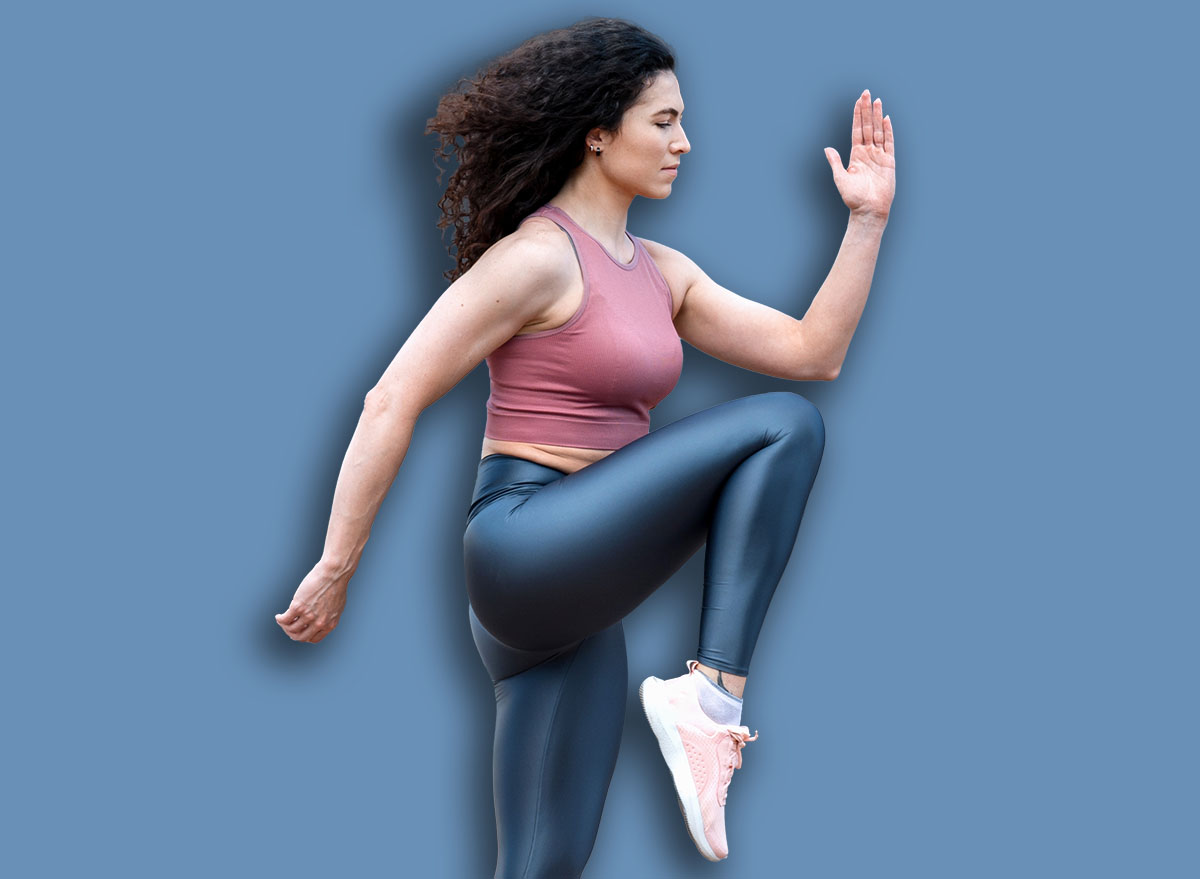
Standing marches with a brief hold at the top force your lower abs to stabilize while your hips move, increasing core activation beyond what normal walking offers. That pause drives deeper muscle engagement in your pelvis and lower belly without added impact. Keeping your torso tall and stable trains the muscles that help reduce belly pooch by improving posture and abdominal control. The slow tempo also elevates your heart rate enough to boost metabolic demand, a win for fat loss and strength.
How to Do It
- Stand tall with hands on hips or at chest height.
- Lift one knee to hip height and hold for one second.
- Lower with control and alternate sides.
- Keep your abs tight and spine neutral.
- Continue for 45–60 seconds.
RELATED: If You Can Do These 4 Chair Exercises Without Resting After 55, Your Strength Is Exceptional
Standing Twist Punches
Twist punches combine rotation with dynamic arm movement that keeps your core under constant tension. Every punch forces your midsection to stabilize while generating force, which recruits more abdominal fibers than repetitive treadmill motion. This pattern also spurs calorie burn by adding upper-body engagement to your core work. Over time, your waistline feels firmer and more responsive because your muscles learn to work together rather than in isolation.
How to Do It
- Stand tall with feet shoulder-width apart.
- Rotate through your core as you punch forward with your right arm.
- Return to center and repeat with your left arm.
- Keep your hips square and draw your belly button in.
- Continue for 40–60 seconds.
RELATED: 5 Bed Exercises That Flatten Lower Belly Pooch While You Wake Up After 60
Standing Slow Mountain Climbers
This upright version of the classic climber hits the lower abs intensely while keeping your hips and spine neutral. Because you remain standing, your balance and core stability get tested continuously, which drives deeper muscle activation than traditional cardio. The slow pacing forces every muscle in your midsection to recruit intentionally, leading to a flatter appearance over time. This move also improves hip mobility and helps you carry tension through longer movement patterns.
How to Do It
- Stand tall with hands together at chest height.
- Lift one knee up with slow, controlled movement.
- Lower it back down and switch sides.
- Keep your core tight and posture tall.
- Continue for 45–60 seconds.