4 Standing Exercises That Shrink Belly Pooch Faster Than Gym Classes After 60
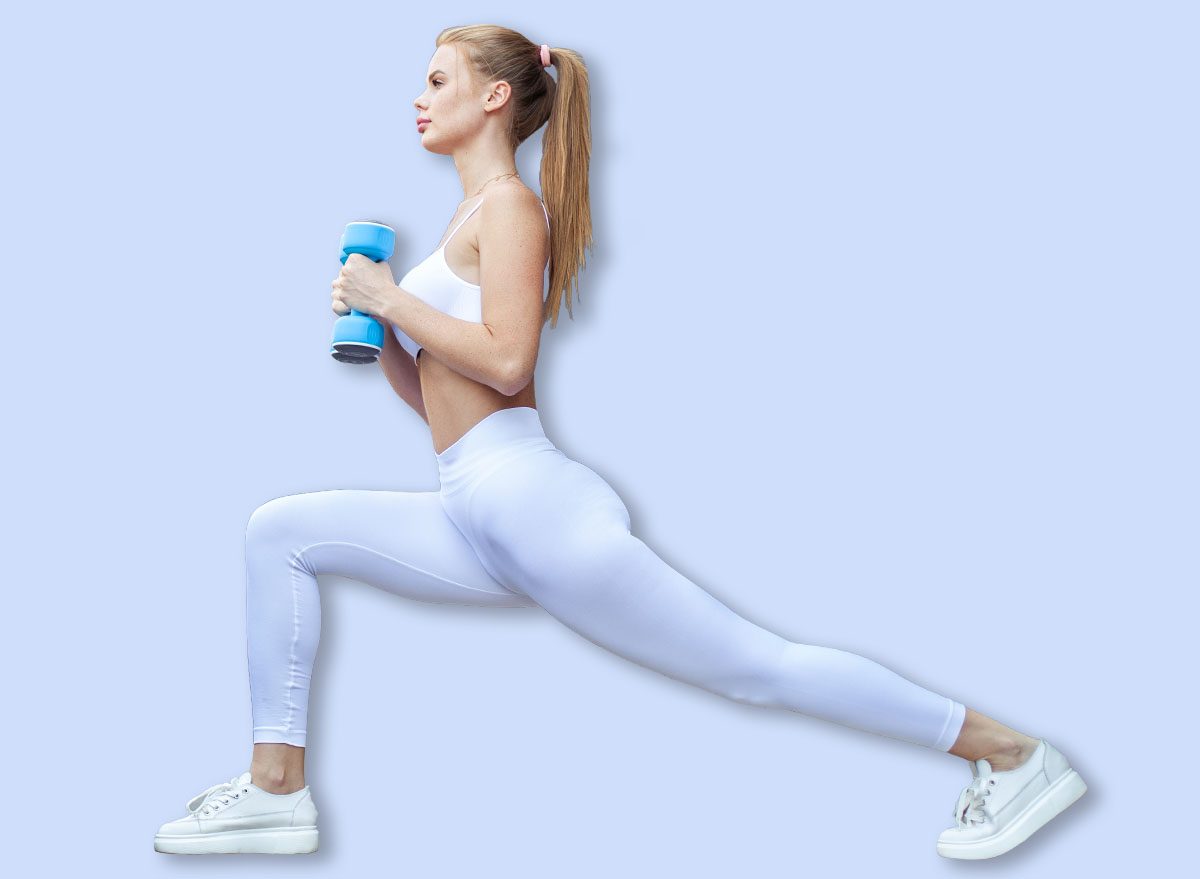
Belly pooch is the phrase people usually use for the softer area around the lower stomach. The real target is body composition, core support, and daily movement. After 60, that area can feel more noticeable when the muscle needs more attention, steps drop, and calories start creeping above what your body uses. The most effective plan gives your body more reasons to burn energy, build lean muscle, and move often.
Gym classes can be motivating, but home-friendly standing exercises are easier to repeat and control. You can move at your own pace, choose the right weight, and focus on exercises that engage more muscle. Dumbbell swings, reverse lunges, step-ups, and walking all train your legs, hips, glutes, and core while supporting the calorie burn needed for fat loss.
For this type of goal, I’d coach the routine around the effort you can repeat. The reps should feel strong and athletic, but still clean. Your core should brace during each swing, lunge, and step-up, while walking provides a simple daily anchor that supports fat loss without beating up your joints.
Use these four standing exercises to build a routine that feels simple, direct, and useful. Strength moves help build lean muscle and improve core control, while increasing your daily step count adds steady movement that helps your waistline change over time.
Dumbbell Ski Swings
Dumbbell ski swings train your glutes, hamstrings, hips, shoulders, and core while giving your heart rate a strong bump. The hinge pattern asks your hips to drive the movement, and your abs brace to keep your torso strong as the weights swing. This makes ski swings useful for shrinking belly pooch because they combine strength, conditioning, and core control into a single standing exercise. Keep the weights light enough to move smoothly and let your hips create the power.
Muscles Trained: Glutes, hamstrings, shoulders, core, upper back.
How to Do It:
- Stand with your feet hip-width apart and hold a dumbbell in each hand.
- Brace your core and soften your knees.
- Hinge your hips back as the dumbbells swing slightly behind you.
- Drive your hips forward to swing the dumbbells up to chest height.
- Keep your arms long and your shoulders relaxed.
- Return to the hinge position with control.
Recommended Sets and Reps: Perform 3 sets of 10 to 15 reps. Rest for 45 to 60 seconds between each set.
Best Variations: Bodyweight hip hinges, kettlebell swings, lighter dumbbell ski swings.
Form Tip: Drive the movement with your hips and keep your core braced through the swing.
RELATED:
If You Can Perform These 4 Single-Leg Exercises Without Wobbling, Your Balance Is Perfect
Goblet Reverse Lunges
Goblet reverse lunges train your glutes, quads, hamstrings, hips, and core while keeping the weight close to your chest. The reverse step provides your legs with a strong, controlled challenge, and the goblet hold engages your abs to keep your torso tall. More muscle involvement means more total effort than small ab-only movements, which supports body-composition changes over time. Use a shorter step if needed and make each rep smooth.
Muscles Trained: Glutes, quadriceps, hamstrings, hips, core.
How to Do It:
- Stand tall with your feet hip-width apart.
- Hold a dumbbell or kettlebell at your chest.
- Brace your core and step one foot back.
- Lower your back knee toward the floor with control.
- Press through your front foot to return to standing.
- Complete all reps, then switch sides.
Recommended Sets and Reps: Perform 3 sets of 8 to 10 reps per leg. Rest for 45 to 60 seconds between each set.
Best Variations: Bodyweight reverse lunges, assisted reverse lunges, split squats.
Form Tip: Keep the weight close to your chest and drive through your whole front foot.
Alternating Step-Ups
Alternating step-ups train your quads, glutes, hamstrings, calves, and core while building strength through a movement you use daily. Each step asks one leg to drive your body upward while your midsection maintains your posture. Step-ups fit belly-pooch goals well because they engage large muscles and can quickly raise your heart rate when performed with a steady rhythm. Choose a low, sturdy step and focus on controlled reps.
Muscles Trained: Quadriceps, glutes, hamstrings, calves, core.
How to Do It:
- Stand facing a sturdy step, stair, or low box.
- Place your whole foot on the step.
- Brace your core and keep your chest lifted.
- Press through your lead foot to stand tall.
- Step back down with control.
- Alternate legs with each rep.
Recommended Sets and Reps: Perform 3 sets of 8 to 12 reps per leg. Rest for 45 seconds between each set.
Best Variations: Low step-ups, assisted step-ups, slow step-downs.
Form Tip: Let your lead leg lift your body and keep your knee tracking with your toes.
Walking With an Increasing Daily Step Count
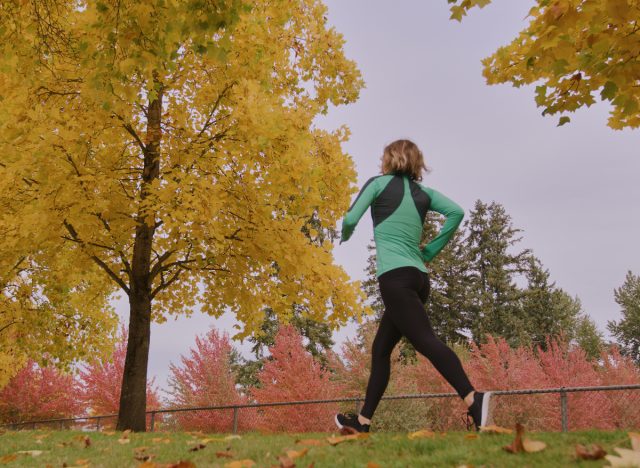
Walking is one of the most reliable tools for shrinking the belly pooch because it helps increase daily calorie burn in a way most people can recover from. A higher step count also builds consistency, which matters for body composition after 60. Walking keeps your glutes, calves, hamstrings, hips, and core active while giving your joints a friendly way to move more. Start from your current baseline and add steps gradually so the habit feels doable.
Muscles Trained: Glutes, hamstrings, calves, hips, core.
How to Do It:
- Track your current daily step count for a few days.
- Add 500 to 1,000 steps per day when you feel ready.
- Walk at a pace that makes your breathing slightly heavier.
- Keep your posture tall and your arms moving naturally.
- Break your steps into shorter walks if that fits your day better.
- Build toward a step goal you can repeat consistently.
Recommended Sets and Reps: Aim to gradually increase your daily steps. Add 5 to 10-minute walks after meals or during breaks.
Best Variations: Brisk walking, incline walking, post-meal walks.
Form Tip: Walk with purpose and keep your chest lifted.
How to Shrink Belly Pooch With Standing Exercise
Shrinking belly pooch works best when your plan combines strength training, conditioning, daily walking, and nutrition habits that support fat loss. These exercises help because they use more of your body than isolated ab work. Your legs, glutes, hips, shoulders, and core all contribute, which creates a stronger overall training effect.
- Use strength moves for lean muscle: Ski swings, reverse lunges, and step-ups train large muscle groups. More muscle involvement helps each workout feel more productive.
- Brace your core on every rep: Your abs should support your torso during swings, lunges, and step-ups. Better bracing helps your midsection feel stronger as body composition improves.
- Make walking your daily base: Increasing your step count gives you a simple way to burn more energy without needing another hard workout.
- Progress at a steady pace: Add reps, increase weight, use a slightly higher step, or add daily steps as the routine becomes easier.
- Support the work with nutrition: Protein-focused meals, smart portions, and consistent eating habits help your training show up in your body over time.
A smaller belly pooch after 60 comes from repeatable movement and steady strength work. Train the big patterns, walk more often, and let daily consistency move your body composition in the right direction.
References
- Beekman M, Schutte BAM, Akker EBVD, Noordam R, Dibbets-Schneider P, de Geus-Oei LF, Deelen J, Rest OV, Heemst DV, Feskens EJM, Slagboom PE. Lifestyle-Intervention-Induced Reduction of Abdominal Fat Is Reflected by a Decreased Circulating Glycerol Level and an Increased HDL Diameter. Mol Nutr Food Res. 2020 May;64(10):e1900818. doi: 10.1002/mnfr.201900818. Epub 2020 Apr 23. PMID: 32271991; PMCID: PMC7317364.
- Harris MB, Kuo CH. Scientific Challenges on Theory of Fat Burning by Exercise. Front Physiol. 2021 Jul 6;12:685166. doi: 10.3389/fphys.2021.685166. PMID: 34295263; PMCID: PMC8290478.