6 Daily Walking Routines That Improve Fitness Better Than the Gym After 50


Gym memberships promise results, yet many people over 50 leave feeling stiff, tired, and frustrated. Machines isolate muscles, limit movement variety, and often ignore balance and coordination entirely. Fitness, however, thrives on rhythm, posture, and consistent full-body engagement, not on how many plates get loaded.
Walking routines deliver those essentials when done with intent. Changing arm drive, direction, tempo, and stance transforms walking into a powerful conditioning tool. These variations challenge the cardiovascular system, strengthen muscles, and sharpen coordination without joint punishment or recovery debt.
Performed daily, the following walking routines outperform gym sessions by reinforcing how the body actually moves. They build endurance, stability, and strength simultaneously, the exact qualities that matter most after 50.
Power Walk With Arm Drive
This routine elevates walking from casual movement to full-body conditioning. Aggressive arm drive recruits the shoulders, upper back, and core, increasing energy output without speeding up. The legs work harder simply because the upper body demands more support.
Daily power walks strengthen posture and improve cardiovascular capacity while keeping impact low. Over time, this routine tightens the waist and builds durable endurance.
How to Do It
- Walk tall with chest open
- Drive arms forcefully front to back
- Keep elbows bent near 90 degrees
- Maintain steady, purposeful pace
Interval Pace Walk
Changing pace challenges the heart and lungs more effectively than steady walking. Short bursts of faster steps followed by controlled recovery maintain intensity without exhaustion. This method improves aerobic capacity while remaining repeatable day after day.
Unlike gym intervals, walking pace changes spare joints and allow longer sessions. Consistency compounds results faster than occasional high effort.
How to Do It
- Walk at comfortable pace to start
- Increase speed for short intervals
- Return to moderate pace
- Repeat rhythm throughout walk
Hill or Incline Walk
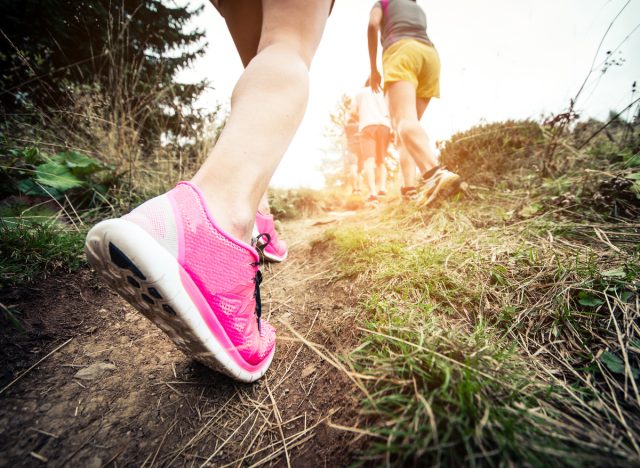
Inclines recruit the glutes and calves more aggressively, increasing strength and metabolic demand. Uphill walking also reduces joint impact compared to flat, fast walking. The torso must lean slightly forward, engaging the core to maintain balance.
Daily incline walks build leg strength and cardiovascular resilience simultaneously. Even mild hills deliver meaningful gains when used consistently.
How to Do It
- Walk uphill or increase treadmill incline
- Take shorter, controlled steps
- Keep torso slightly forward
- Push through heels with intent
Lateral Step Walk
Moving sideways challenges muscles that standard walking neglects. This routine strengthens hips, improves balance, and sharpens coordination. The constant side stepping forces stabilizers to stay engaged, raising total workload without increasing speed.
Daily lateral walks improve joint integrity and reduce fall risk. This added dimension builds fitness the gym often overlooks.
How to Do It
- Step sideways for several steps
- Keep hips low and chest tall
- Change direction periodically
- Move smoothly with control
Loaded Carry Walk
Adding light load transforms walking into strength training. Carrying weights challenges grip, arms, core, and posture simultaneously. The body must stay braced with every step, dramatically increasing muscular involvement.
Performed daily, this routine builds functional strength and endurance faster than isolated gym exercises. Short distances deliver powerful returns.
How to Do It
- Hold weights at sides or chest
- Walk slowly with upright posture
- Keep ribs down and shoulders set
- Stop before form breaks
Backward Walk
Walking backward forces the brain and muscles to work harder. This pattern strengthens the knees, improves coordination, and challenges balance safely at low speed. The novelty increases engagement without adding impact.
Daily backward walking sharpens movement control and reinforces lower-body strength. Even brief bouts enhance overall fitness.
How to Do It
- Walk backward slowly in safe area
- Keep steps short and controlled
- Stay upright with eyes forward
- Use support if needed