5 Bed Exercises That Firm Waist Thickening Faster Than Weight Training After 55

A firm waist is usually what people are after when they start paying more attention to their midsection, and it goes beyond how it looks. From a coaching standpoint, I see it show up as control. When your core is doing its job, your body feels more connected, and movement doesn’t feel loose or unsupported. Over time, that starts to slip, especially when the core isn’t trained directly or most of your day is spent sitting and moving in short bursts.
In the gym and with clients, I’ve noticed the same pattern. When someone builds strength through their midsection, it carries over into everything else. Getting out of bed feels easier, balance improves, and there’s less strain on the lower back. That’s where the idea of a “firm waist” really comes together, how it looks and how it performs tend to follow each other.
Strength training still plays a role, especially when the goal is to build muscle and stay strong overall. At the same time, some of the best results come from adding in small, consistent doses of movement. A few minutes in bed before your feet hit the floor or before you turn in for the night is an easy way to build that consistency without needing to carve out extra time.
Bodyweight core work fits well in that setting because it keeps things simple while still being effective. When you slow your reps down and stay in control, your muscles stay engaged longer, which is where the benefit really comes from. I’ve seen that approach work time and time again. Stick with it, and you’ll start to feel your core working during everyday movement, not just when you’re exercising.
Same Side Dead Bug
Moving the same arm and leg together makes this variation more demanding than the standard version. Your core has to work harder to keep your lower back pressed down and your hips steady. When you take your time and stay controlled, the movement becomes much more challenging than it looks. You’ll feel your midsection working through the full rep, rather than just moving your arms and legs.
Muscles Trained: Core, hip flexors, shoulders
How to Do It:
- Lie on your back with your arms extended toward the ceiling and knees bent at 90 degrees.
- Press your lower back gently into the bed.
- Extend one arm and the same-side leg toward the bed.
- Keep your core engaged and avoid arching your back.
- Return to the starting position and switch sides.
Recommended Sets and Reps: Perform 3 sets of 8 to 10 reps per side. Rest for 30 seconds between each set.
Best Variations: Opposite arm and leg dead bugs, paused reps, slow tempo reps
Form Tip: Keep your lower back pressed down throughout.
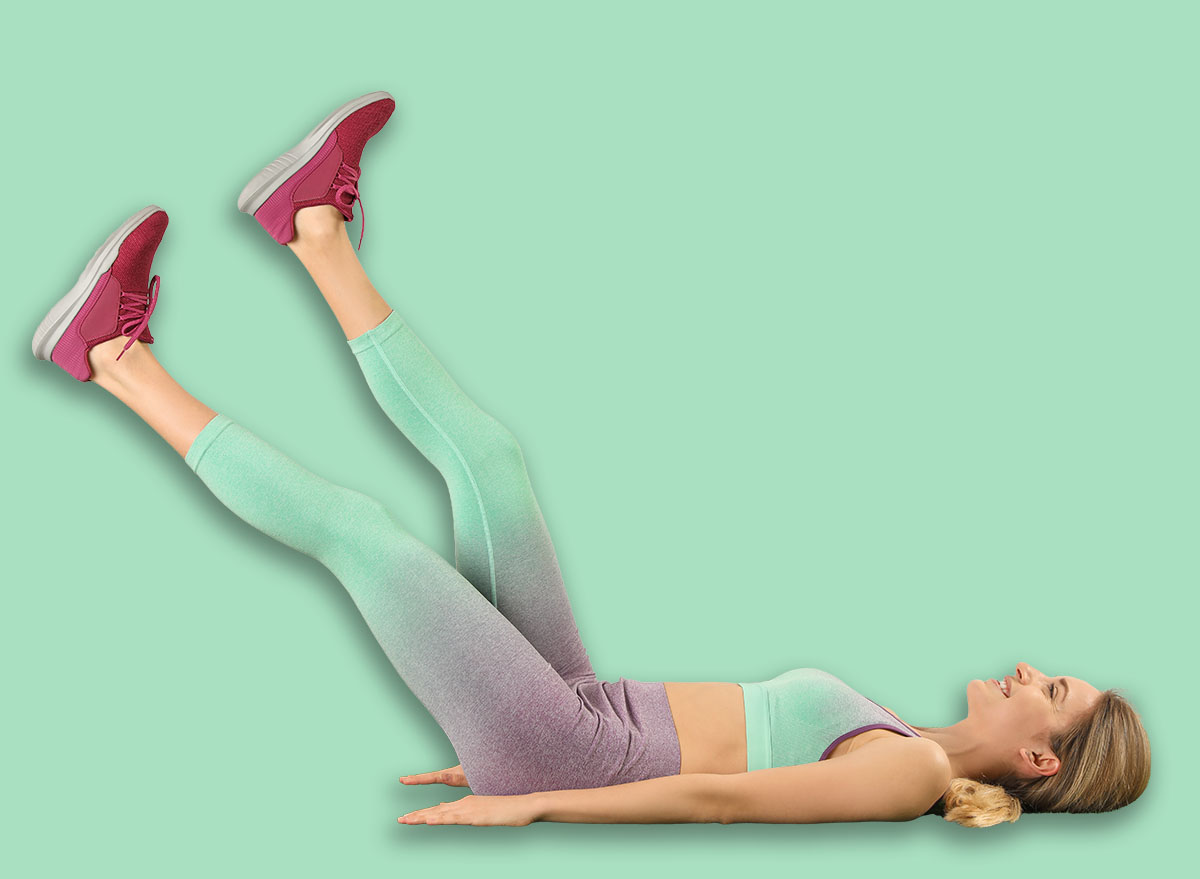
Flutter Kicks
Flutter kicks keep your core working the entire time since your legs never fully stop. That forces your midsection to stay engaged, especially when you keep the movement controlled. Smaller, slower kicks make a big difference here. When you rush, the tension disappears, but when you stay steady, your lower abs stay involved from start to finish.
Muscles Trained: Lower abs, hip flexors
How to Do It:
- Lie on your back with your legs extended.
- Place your hands under your hips for support if needed.
- Lift your legs slightly off the bed.
- Alternate small kicks up and down with each leg.
- Keep your core engaged and your lower back pressed down.
Recommended Sets and Reps: Perform 3 sets of 20 to 30 seconds. Rest for 30 seconds between each set.
Best Variations: Higher leg position, slower kicks, extended hold with small pulses
Form Tip: Keep your kicks small and controlled.
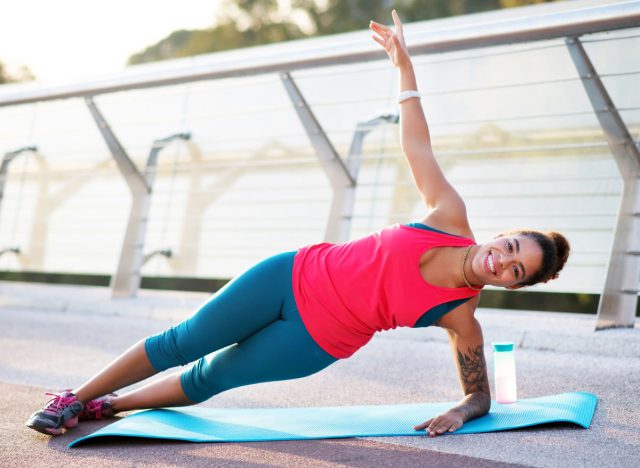
Side Plank Hold
Side planks put the focus on the muscles along the sides of your waist. These muscles help keep you steady when you shift your weight or change direction. When they’re trained consistently, your balance improves, and your core feels more solid overall. Holding the position with good alignment keeps the work where it belongs.
Muscles Trained: Obliques, core, shoulders
How to Do It:
- Lie on your side with your legs stacked.
- Place your forearm under your shoulder.
- Lift your hips to form a straight line.
- Hold the position while staying tight through your core.
- Lower back down and switch sides.
Recommended Sets and Reps: Perform 3 sets of 20 to 30 seconds per side. Rest for 30 seconds between each set.
Best Variations: Bent-knee side plank, extended hold, reach-throughs
Form Tip: Keep your hips lifted and your body in a straight line. If a traditional side plank is a little tough, opt for a kneeling side plank!
Russian Twists
Russian twists bring rotation into your routine, which your body uses more often than you might think. Turning, reaching, and shifting all rely on this pattern. When you stay controlled and move through your torso instead of just swinging your arms, your obliques stay engaged throughout the set. That steady tension helps build strength through your waist.
Muscles Trained:
Obliques, core
How to Do It:
- Sit up with your knees bent and feet lightly on the bed.
- Lean back slightly while keeping your chest up.
- Clasp your hands together in front of you.
- Rotate your torso to one side.
- Return to the center and rotate to the other side.
Recommended Sets and Reps: Perform 3 sets of 10 to 15 reps per side. Rest for 30 seconds between each set.
Best Variations: Feet elevated, slower tempo, pause at each side
Form Tip: Rotate through your torso and avoid relying solely on your arms.
Forearm Plank
The forearm plank challenges your core to hold a steady position without movement. Staying aligned from head to heels keeps your abs and sides working together. The longer you hold that position with control, the more your core has to stay engaged. It’s a simple setup, but it gets challenging quickly when done well.
Muscles Trained: Core, shoulders
How to Do It:
- Start on your forearms with your elbows under your shoulders.
- Extend your legs behind you.
- Keep your body in a straight line from head to heels.
- Brace your core and hold the position.
- Maintain steady breathing throughout.
Recommended Sets and Reps: Perform 3 sets of 20 to 30 seconds. Rest for 30 seconds between each set.
Best Variations: Longer holds, alternating leg lifts, shoulder taps
Form Tip: Keep your hips level and avoid letting them sag.
The Best Tips for Firming Your Waist After 55
This is where most people either overcomplicate things or bounce between routines without sticking with anything long enough to see a change. What tends to work better is keeping it simple and doing it often enough for your body actually to adapt. These bed exercises aren’t meant to feel like a full workout, but when they become part of your routine, they give your core a steady dose of work that adds up over time. You’ll start to notice it in small ways first, better control when you move, less tension through your lower back, and a stronger connection through your midsection. From there, it builds.
- Slow your reps down: Control keeps your muscles working longer during each set.
- Stay aware of your position: A small shift in form can take tension off your core without you realizing it.
- Keep your lower back set: A light press into the surface helps maintain alignment.
- Stick with it daily or close to it: Consistency matters more than intensity here.
- Carry it into the rest of your day: The more you stay engaged in everyday movement, the more you reinforce what you’re building.
References
- Fidale, Thiago Montes et al. “Eletromyography of abdominal muscles in different physical exercises: An update protocol for systematic review and meta-analysis.” Medicine vol. 97,17 (2018): e0395. doi:10.1097/MD.0000000000010395
- Burd, Nicholas A et al. “Muscle time under tension during resistance exercise stimulates differential muscle protein sub-fractional synthetic responses in men.” The Journal of physiology vol. 590,2 (2012): 351-62. doi:10.1113/jphysiol.2011.221200