5 Morning Exercises That Firm Belly Overhang Faster Than Pilates After 60

Many adults over 60 notice that the lower abdomen begins to soften and hang slightly, even when body weight hasn’t changed dramatically. The issue rarely comes from a lack of effort. More often, it happens because the deep abdominal muscles responsible for holding the midsection tight gradually weaken with age and inactivity. Over the years training clients in their 50s, 60s, and beyond, I’ve seen that rebuilding those muscles requires simple, consistent movements that activate the entire core rather than isolated, slow Pilates-style routines.
Pilates certainly improves flexibility and coordination, but many people over 60 need a more direct approach to core activation. Exercises that combine abdominal tension, hip movement, and posture training tend to stimulate the muscles responsible for holding the stomach flat during daily activities like standing, walking, and climbing stairs. When those muscles wake up again, the belly begins to feel tighter and more supported.
Morning workouts provide an ideal opportunity to train these muscles. The body responds well to gentle activation early in the day, and a short routine can quickly restore circulation, posture, and abdominal engagement. I often encourage clients to practice a few focused movements before breakfast, and many report noticeable improvements in core control within just a few weeks.
The five exercises below activate the deep abdominal muscles, lower core stabilizers, and hip flexors that help support the stomach area. Perform them slowly and deliberately, focusing on tightening the midsection during every movement. Consistent practice helps rebuild the strength that naturally holds the belly firm.
Standing Knee Drives
Standing knee drives activate the lower abdominal muscles while reinforcing balance and posture. I use this movement frequently with clients who want to tighten the lower stomach because it mimics the natural motion of walking while forcing the core to stabilize the torso.
As the knee lifts toward the chest, the abdominal muscles contract to prevent the body from leaning backward. That controlled tension strengthens the lower portion of the core, an area that often weakens with age. Practicing this movement daily helps rebuild coordination between the hips and abdominal wall.
How to Do It
- Stand tall with feet hip-width apart
- Lift one knee toward your chest
- Tighten abdominal muscles
- Lower the leg slowly
- Alternate legs steadily.
Seated Knee Tucks
Seated knee tucks provide a powerful core contraction without placing stress on the back or shoulders. I often introduce this movement to clients over 60 because it strengthens the lower abdominal muscles while allowing them to stay supported by a chair.
As the knees draw toward the chest, the abdominal wall must contract to control the movement. The slow extension afterward forces the core to remain engaged, which strengthens the muscles responsible for flattening the stomach.
How to Do It
- Sit upright near the edge of a chair
- Lean back slightly
- Pull both knees toward your chest
- Extend legs slowly forward
- Repeat with control.
Heel Tap Crunch
Heel taps strengthen the side abdominal muscles while reinforcing lower-core stability. I often recommend this exercise because it activates the entire abdominal wall without requiring aggressive crunching or twisting movements.
By reaching toward the heels while keeping the shoulders slightly elevated, the core remains under constant tension. Over time, this sustained contraction helps rebuild the muscles that support the lower stomach.
How to Do It
- Lie on your back with knees bent
- Lift shoulders slightly off the floor
- Reach one hand toward the heel
- Return to center
- Alternate sides steadily.
Standing Side Crunch
Standing side crunches strengthen the oblique muscles along the waistline. These muscles play a major role in holding the abdominal wall tight and preventing the stomach from protruding forward.
I frequently include this movement in morning routines because it activates the core while improving mobility in the spine and hips. When performed slowly, the movement produces a strong contraction along the sides of the stomach.
How to Do It
- Stand tall with hands behind head
- Lift one knee to the side
- Bring elbow toward the knee
- Return slowly to start
- Alternate sides.
Glute Bridges
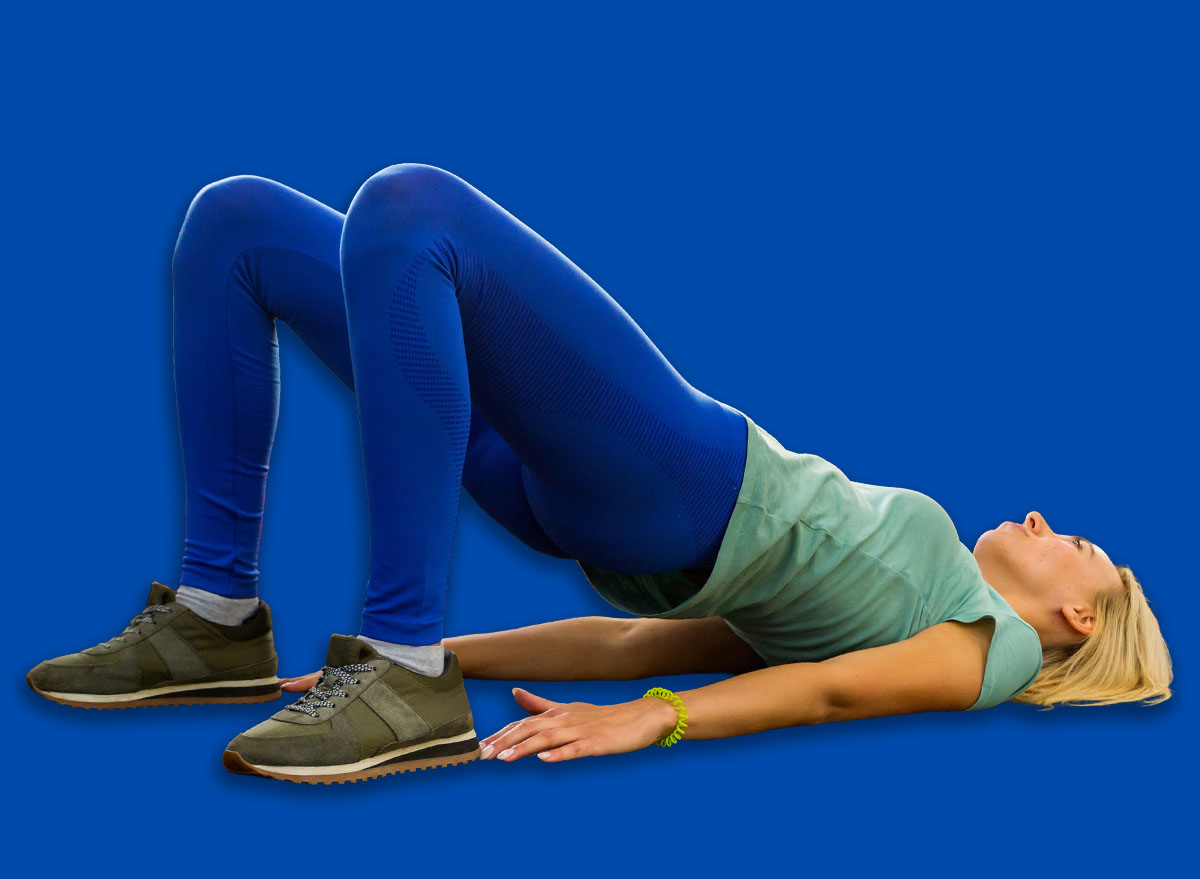
Although glute bridges primarily strengthen the hips, they also activate the lower abdominal stabilizers. I often remind clients that strong glutes help support the pelvis, which plays a key role in maintaining a flatter stomach.
As the hips lift off the floor, the core tightens to stabilize the spine. This coordinated muscle contraction strengthens the lower abdominal region while improving posture and lower-body strength.
How to Do It
- Lie on your back with knees bent
- Place feet flat on the floor
- Lift hips upward slowly
- Squeeze glutes at the top
- Lower hips with control.