4 Seated Exercises That Restore Balance Faster Than Standing Workouts After 65
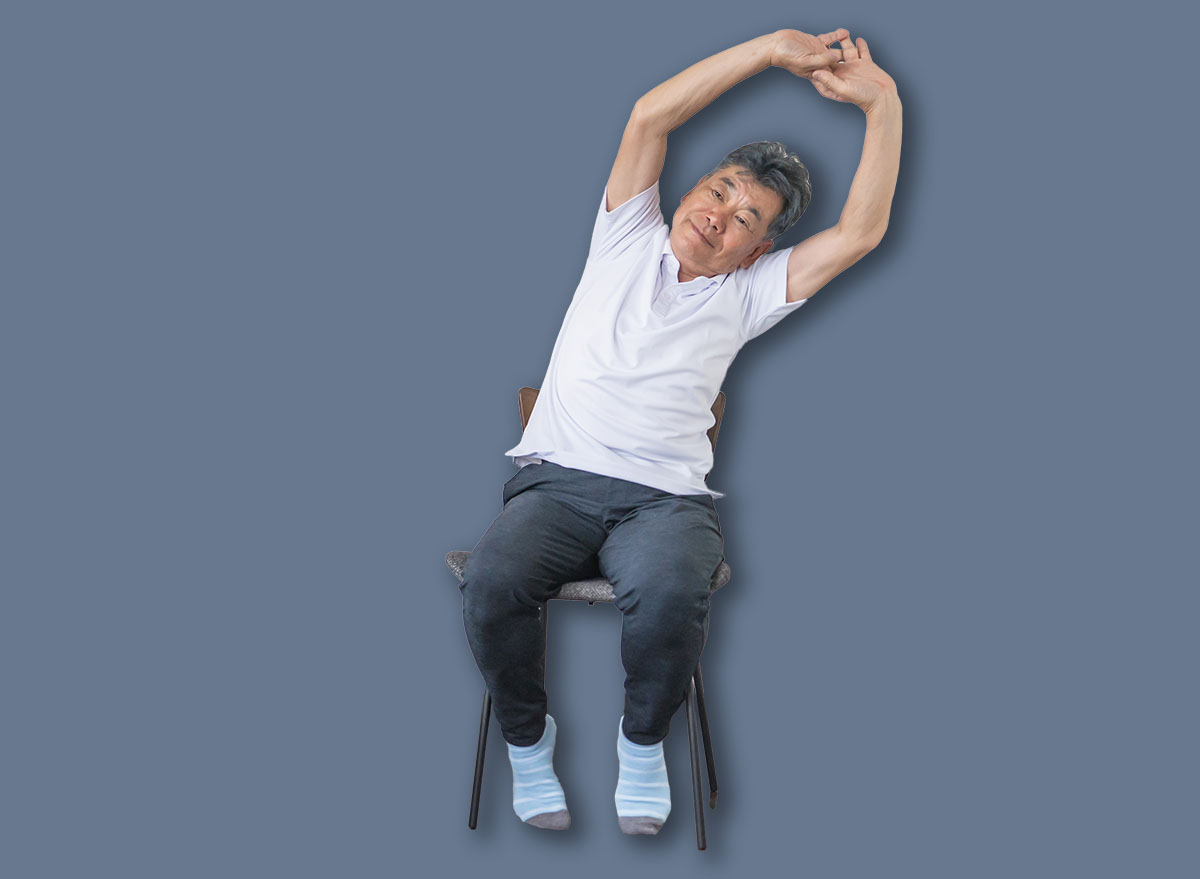

Many don’t realize just how important it is to focus on your balance at the gym—especially as you age. While cardio and strength training typically take precedence, balance training is essential to prevent falling and getting injured. In this stage of life, certain functions start to decline, including muscle strength, inner ear function, and vision. By boosting your balance, you will be more mobile, confident, and able to complete everyday functions safely and independently.
That’s why we spoke with Dr. Timur Alptunaer, MD, RN, FACEP, a physician at In House Wellness, to help you get a handle on how to restore balance after 65. He breaks down four seated exercises that can work more efficiently than standing workouts.
Why Seated Workouts Are More Effective
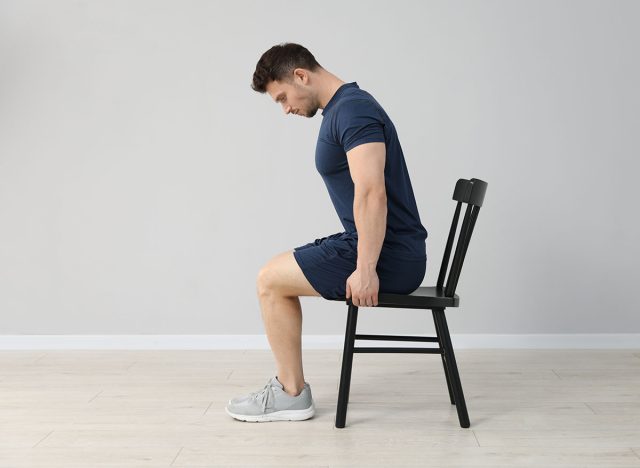
“One of the most important methods we use to help adults over 65 maintain their independence and confidence is balance training,” Dr. Alptunaer tells us. “Exercises done while seated reduce fear of falling, which allows the nervous system to focus on control, rather than in protection mode. When the muscles are activated in balance training, they are more accurate in their movements, rather than softening defensively.”
From a balance training perspective, Dr. Alptunaer notes that nervous system functioning begins with controlling the activation of your hips and core.
“Building endurance in standing does not come before this. Seated positions isolate these systems and retrain coordination before addressing the complexity of standing or walking,” Dr. Alptunaer adds.
Now, it’s important to note that seated balance training isn’t necessarily faster or “superior” to standing balance workouts. According to Sean Carpenter, PT, DPT, Cert. MDT, Cert. DN, Lead Therapist Golf Specialty, Sports Medicine & Rehabilitation, Memorial Hermann Health System, “They serve as a safe and effective starting point for adults over 65 who may feel unsteady, lack confidence, or have a fear of falling.”
Seated March
“This activity improves the strength of the hip flexors and the coordination between the lower body and the core, a necessary component for walking balance,” Dr. Alptunaer tells us.
- Begin seated with your feet placed hip-width apart on the floor.
- Lift your left knee up to hip height.
- Lower.
- Then, lift your right knee up to hip level.
- Lower.
- Maintain solid posture as you continue to “march.”
- Perform 2 sets of 10 to 12 reps, focusing on slow and controlled movement.
Seated Weight Shifts

“This activity improves overall balance control and shifts awareness of body positioning, which is important to avoid sideways falls,” Dr. Alptunaer points out.
- This exercise is quite simple—it involves starting in a seated position.
- Then, shift your weight from side to side, maintaining a tall posture.
- Complete 2 sets of 10 shifts in each direction.
Seated Toe and Heel Raises
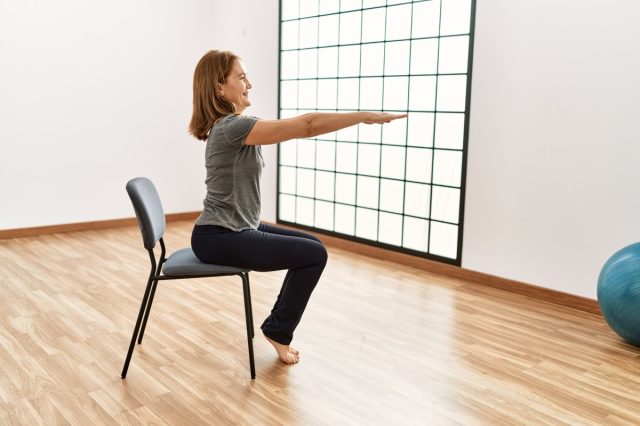
“This builds strength in the lower leg muscles essential for reactionary balance and improves the stability of the ankles, which tends to be a weak link in the elderly,” Dr. Alptunaer explains.
- Begin seated with tall posture and feet flat on the ground.
- Points your toes, lifting them from the floor, and then your heels.
- Complete 2 sets of 12 to 15 reps.
Seated Trunk Rotations
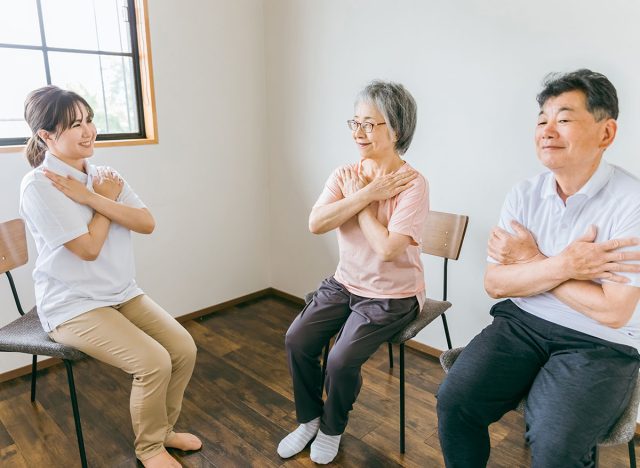
“This improves balance in the ability to turn and reach because of the core control and spinal mobility it enhances,” Dr. Alptunaer notes.
- Begin seated with your legs tall.
- Cross your arms over your chest.
- Slowly rotate from one side to the other.
- Complete 2 sets of 8 to 10 reps on each side.