5 Effective Walking Exercises That Flatten Belly Overhang Better Than Gym After 50

Belly overhang after 50 rarely responds to traditional gym workouts because most routines fail to challenge the way your core actually functions during daily movement. Machines isolate muscles, but they remove balance, coordination, and natural tension, which limits how much your midsection truly works. Walking-based exercises change that equation by forcing your core to stabilize your body with every step. When done with intention, walking becomes one of the most powerful tools for tightening the lower belly.
After 50, your body reshapes best through movement patterns that stay upright, controlled, and rhythm-driven. Walking drills activate deep abdominal muscles continuously, especially the ones responsible for pulling the belly inward and supporting posture. Instead of short bursts of effort, these exercises apply steady tension that trains your core to stay engaged longer. That sustained activation leads to visible tightening around the waistline.
The five walking exercises below demand focus, posture, and purposeful movement rather than speed or exhaustion. Each one layers in core engagement, balance, and rotation to challenge belly overhang from multiple angles. No gym, no machines, no floor work required. Stay consistent with these drills and your midsection will start responding with better tone, stronger control, and a noticeably flatter profile.
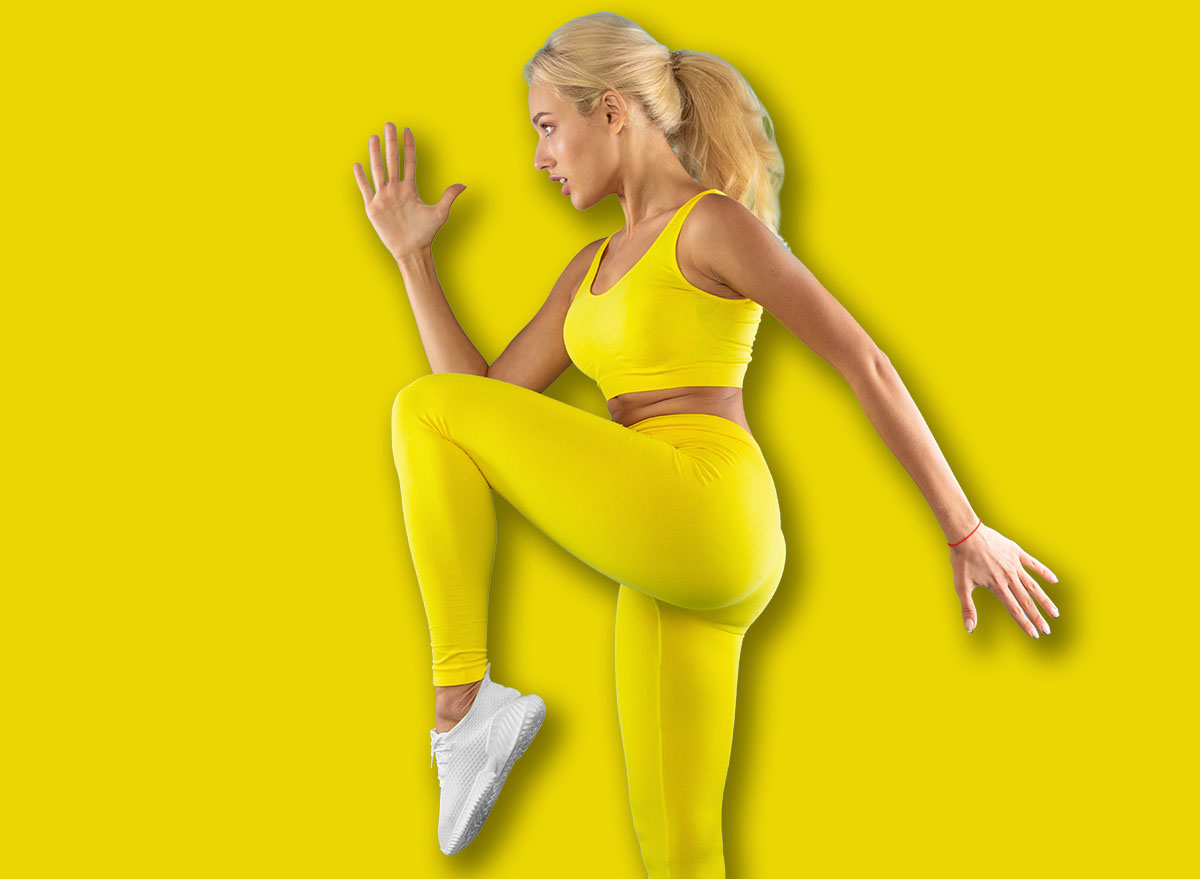
High-Knee Power Walk
This walking variation transforms a basic step into a core-dominant movement by exaggerating knee lift and posture. Driving the knee higher forces your lower abs to contract while your torso stabilizes upright, creating a tightening effect through the belly. The deliberate pace keeps tension continuous, which matters more than speed for reshaping the midsection after 50. Over time, this drill retrains your core to support every step with strength rather than slack.
How to Do It
- Stand tall with arms bent at your sides
- Step forward while lifting one knee toward hip height
- Drive the opposite arm forward naturally
- Alternate sides in a controlled rhythm
- Continue for 60–90 seconds
Walking Core Braces
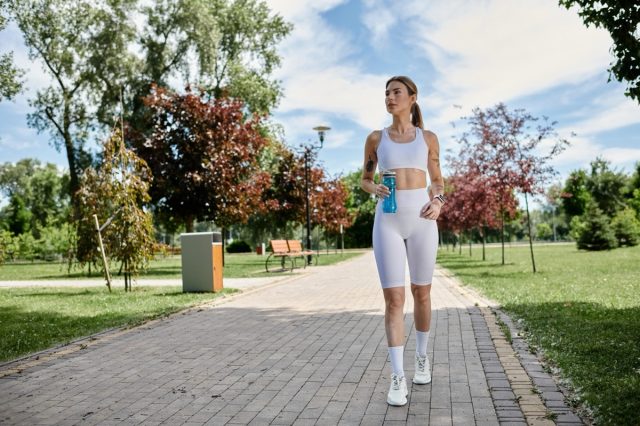
This exercise teaches your core to stay engaged while your body moves forward, a skill that directly targets belly overhang. By bracing your midsection before each step, you activate deep abdominal muscles that pull the lower belly inward. The slow, intentional walking pattern reinforces posture and spinal support without joint strain. This drill builds endurance in the muscles responsible for a flatter, firmer waist.
How to Do It
- Stand tall and gently tighten your core
- Walk forward with short, controlled steps
- Keep shoulders relaxed and ribs down
- Maintain tension through your midsection
- Continue for 2–3 minutes
Cross-Body Walking Steps
Adding rotation to walking increases oblique engagement, which plays a key role in reducing belly overhang. Each cross-body step forces your core to resist twisting while still allowing controlled rotation. That balance of movement and stability creates a powerful tightening stimulus around the waist. This drill also improves coordination and balance, both critical after 50.
How to Do It
- Step forward with your right foot
- Rotate your torso slightly to the right
- Step forward with the left foot and rotate left
- Keep movements smooth and controlled
- Continue for 90 seconds
Heel-to-Toe Posture Walk
This slow walking drill emphasizes alignment and core control rather than distance. Walking heel to toe challenges balance, forcing your abdominal muscles to stay active to keep you upright. The deliberate pace increases time under tension for your midsection, which accelerates tightening. This movement also reinforces better posture, helping your belly appear flatter even at rest.
How to Do It
- Walk forward placing heel directly in front of toe
- Keep eyes forward and chest tall
- Engage your core lightly with each step
- Move slowly and deliberately
- Continue for 1–2 minutes
March-and-Hold Walk
Pausing briefly at the top of each step intensifies core engagement and reduces reliance on momentum. The hold forces your lower abs to stabilize your pelvis while your body balances on one leg. That moment of control targets stubborn belly overhang more effectively than continuous walking alone. This drill also strengthens hips and improves walking efficiency.
How to Do It
- Step forward and lift one knee
- Hold the knee lift for two seconds
- Step down and switch sides
- Keep posture tall and core tight
- Continue for 60–90 seconds