6 Morning Exercises That Build Posture Strength Faster Than Pilates After 60

Poor posture rarely develops overnight. After 60 years of sitting, looking down at phones, driving, and even simple daily habits, the shoulders gradually pull forward and weaken the muscles that keep the spine upright. As a trainer, I’ve found that many clients believe rounded shoulders and a stooped posture simply come with age. More often than not, the real culprit is muscle weakness rather than aging itself, and that’s something you can absolutely improve.
Stretching has its place, and Pilates offers excellent mobility work, but posture depends on strength just as much as flexibility. Your upper back, shoulders, core, glutes, and neck all work together to keep your body aligned throughout the day. When those muscles grow stronger, standing tall becomes less of a conscious effort and more of a natural habit. That’s why I encourage clients to begin every morning by activating the muscles responsible for supporting good posture instead of only stretching tight areas.
I’ve coached adults over 60 for many years, and the clients who maintain the best posture rarely spend hours exercising. They consistently perform a handful of simple strengthening exercises that reinforce healthy movement patterns every single day. These six exercises wake up the muscles that support your spine, improve shoulder positioning, and help you stand taller from the moment your day begins. Stick with them for a few weeks, and you’ll likely notice better posture without constantly reminding yourself to “sit up straight.”
Wall Angels
Whenever someone walks into my gym with rounded shoulders, wall angels almost always become part of their program. This movement strengthens the muscles between the shoulder blades while improving shoulder mobility and encouraging proper alignment through the upper back. Many adults discover they have difficulty keeping their arms against the wall at first, which immediately highlights where mobility and strength have declined. With regular practice, the movement becomes smoother as the upper back grows stronger and posture begins improving naturally. I appreciate this exercise because it teaches the body what proper alignment actually feels like.
How to Do It
- Stand with your back against a wall.
- Keep your head, shoulders, and hips touching the wall.
- Raise your arms into a goalpost position.
- Slide your arms overhead slowly.
- Return to the starting position.
- Complete 10 to 12 repetitions.
Resistance Band Pull-Aparts
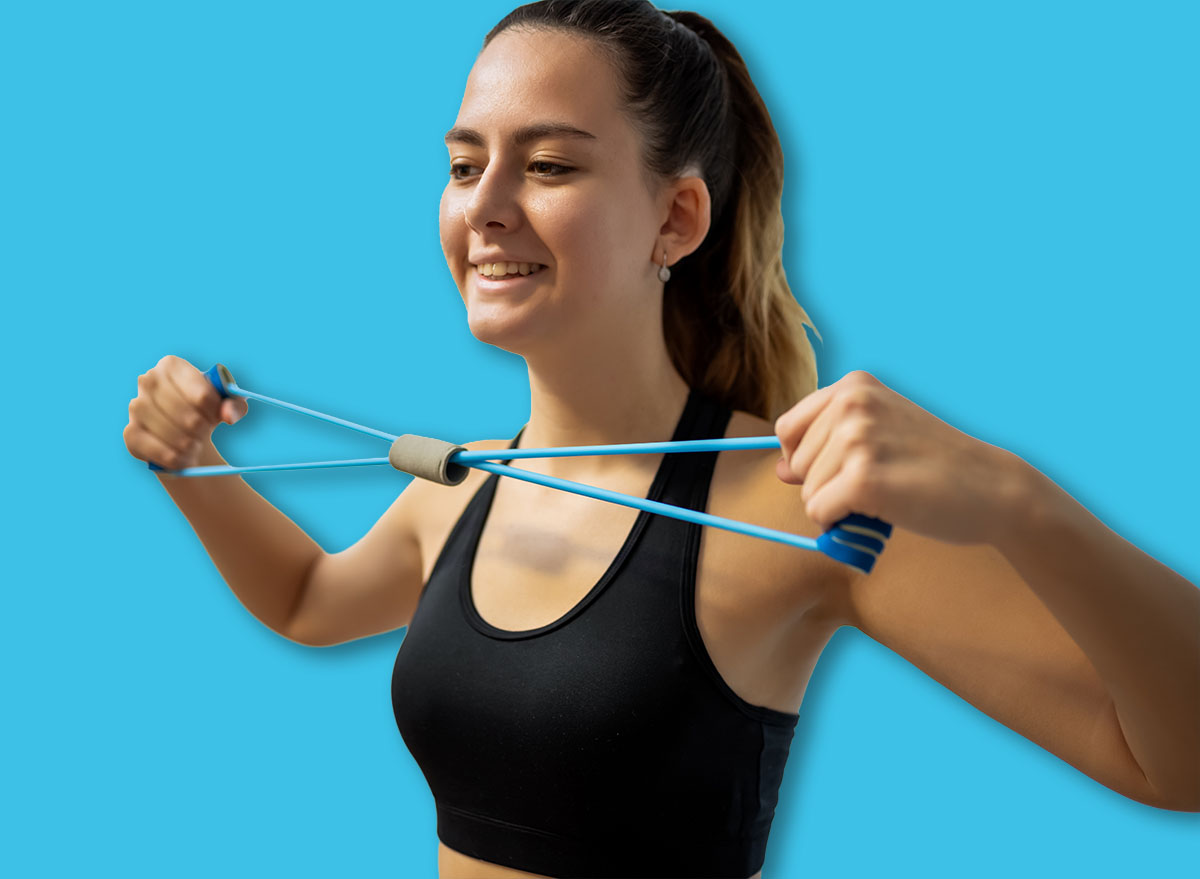
Weak upper-back muscles often allow the shoulders to drift forward throughout the day. Resistance band pull-aparts directly strengthen those muscles while encouraging better shoulder positioning and scapular control. I frequently recommend them because they counteract hours of sitting better than almost any other simple movement. Clients often notice their shoulders resting farther back after just a few weeks of consistent practice. Stronger muscles between the shoulder blades make maintaining good posture feel effortless instead of exhausting.
How to Do It
- Hold a resistance band at shoulder height.
- Keep your arms nearly straight.
- Pull the band apart.
- Squeeze your shoulder blades together.
- Return slowly.
- Perform 12 to 15 repetitions.
Bird Dog
Strong posture begins with a stable core, not just the muscles you see in the mirror. Bird dogs challenge the deep stabilizers of the spine while strengthening the glutes, shoulders, and back simultaneously. I often tell clients that this exercise teaches the body to resist unwanted movement, which carries over into standing, walking, and lifting throughout the day. Although it looks simple, maintaining balance while extending opposite limbs demands full-body coordination. That combination makes it one of my favorite morning exercises for improving posture from the inside out.
How to Do It
- Start on your hands and knees.
- Extend your right arm and left leg.
- Hold briefly.
- Return with control.
- Alternate sides.
- Perform 10 repetitions per side.
Chin Tucks
Forward head posture has become incredibly common, especially among adults who spend hours reading, using computers, or looking at phones. Chin tucks strengthen the deep neck muscles responsible for supporting proper head alignment without placing strain on the cervical spine. I introduce this movement early because improving head position immediately benefits the entire posture chain. Clients frequently report less neck tension and better awareness of their posture after adding chin tucks to their morning routine. Small adjustments often produce significant improvements over time.
How to Do It
- Stand or sit tall.
- Look straight ahead.
- Pull your chin straight back.
- Avoid tipping your head up or down.
- Hold for 3 to 5 seconds.
- Repeat 10 to 15 times.
Glute Bridge
Many people don’t associate strong glutes with better posture, but they play a major role in supporting the pelvis and lower back. Weak glutes often contribute to poor standing mechanics and excessive strain throughout the spine. I include glute bridges because they strengthen the hips while encouraging proper alignment through the core and pelvis. Clients often notice they stand taller and walk more comfortably once these muscles become stronger. Building strength from the ground up creates lasting improvements in posture.
How to Do It
- Lie on your back with knees bent.
- Keep your feet flat on the floor.
- Tighten your core.
- Lift your hips until your body forms a straight line.
- Lower slowly.
- Perform 12 to 15 repetitions.
Standing Rows with Resistance Band
I like finishing posture routines with a movement that reinforces everything the upper back should be doing throughout the day. Standing rows strengthen the rhomboids, rear shoulders, and middle trapezius while encouraging healthy shoulder positioning. Every repetition reinforces the habit of pulling the shoulders back rather than allowing them to round forward. Many clients tell me they feel taller and more confident immediately after completing a set. Strong pulling muscles form the foundation of lasting posture improvements.
How to Do It
- Secure a resistance band in front of you.
- Hold one handle in each hand.
- Pull your elbows straight back.
- Squeeze your shoulder blades together.
- Return slowly with control.
- Complete 12 to 15 repetitions.