4 Seated Exercises That Flatten Stubborn Belly Fat Faster Than Crunches After 60
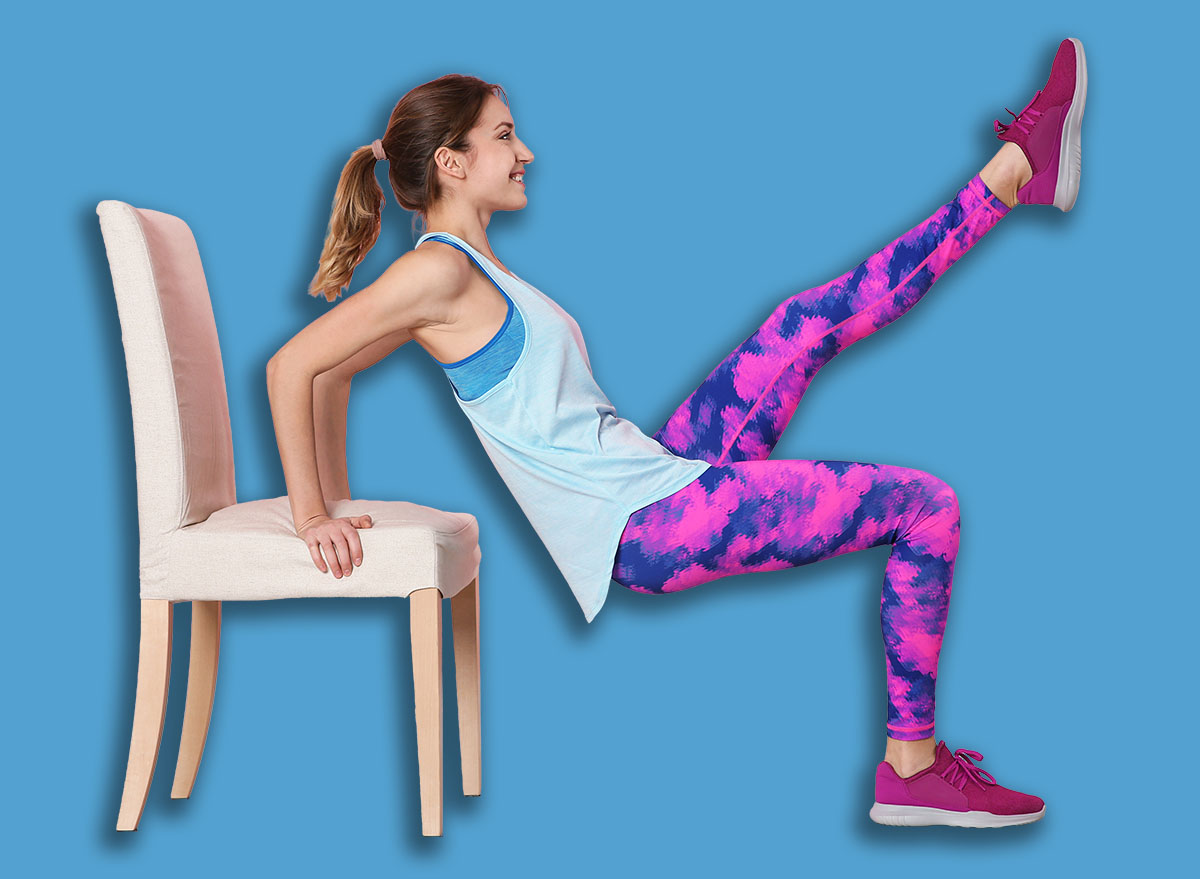

If you’re wondering how to eliminate belly fat, join the club. It’s an area of the body that accumulates fat easily as you age, frustrating many individuals. Crunches are an excellent choice when it comes to strengthening and toning your core muscles—especially when combined with a calorie deficit. But we have a better, faster method.
Seated exercises just may be your favorite new go-to workout. They’re quite productive in flattening the belly area and giving a tighter physique. Seated workouts will activate your core and boost your overall calorie burn with consistency.
We spoke with Daniella Rivka, a Neuro Restorative Movement Specialist and co-founder of The Neu Gym—Dallas’s first boutique adaptive gym dedicated to neurological recovery, who explains just how you can build muscle, improve stability, support metabolism, and flatten stubborn belly fat faster than crunches after 60.
How Age-Related Changes in Core Strength Impact the Belly

As you age, core strength and posture typically decline, which can cause an accumulation of unwanted belly fat. Weak core muscles also majorly impact physical performance—including mobility and balance.
“A weak core fails to adequately support the spine, increasing discomfort and the risk of injury as the body compensates through other muscle groups,” Rivka says. “Strengthening the core is essential for managing weight and preventing the accumulation of belly fat, as it enhances metabolic function and supports physical activity. Additionally, improved posture resulting from a strong core promotes better spinal alignment, reduces strain on muscles, and enhances overall stability and efficiency in movement. Incorporating targeted core exercises into a fitness routine can help older adults enhance their posture, maintain independence, and improve their overall quality of life.”
Why Seated Workouts Outperform Classic Crunches
Performing seated workouts serves as a safe, practical way for aging adults to develop solid core strength, preserve functional fitness, and boost quality of life.
“Seated movements can outperform traditional crunches for older adults due to their stability, reduced risk of injury, and effective core engagement without excessive strain on the lower back,” Rivka tells us. “By providing a stable base, seated exercises allow individuals to safely activate their abdominal muscles while maintaining balance and posture, which is particularly important as age-related changes in stability occur.”
Seated Exercises for Belly Fat After 60
Below, Rivka breaks down four productive standing exercises that help flatten stubborn belly fat.
“Exercises like seated leg lifts and torso twists mimic functional daily activities, enhancing overall core strength and supporting better posture,” Rivka explains. “Additionally, these movements minimize pressure on the spine and can be easily modified to accommodate varying fitness levels, making them accessible for those with mobility concerns.”
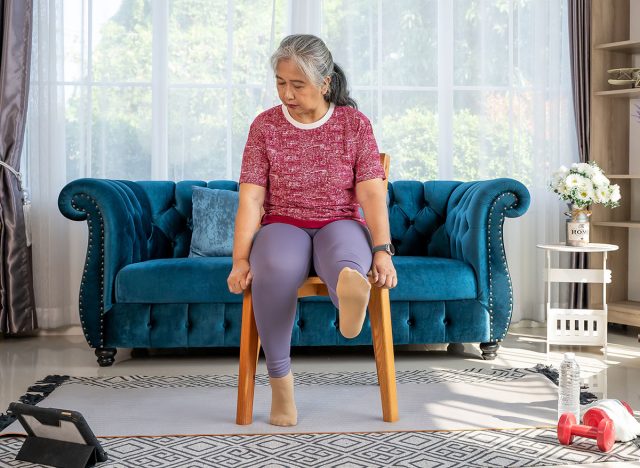
Seated Leg Lifts
- Begin sitting tall with your back supported against the chair.
- Place your feet flat on the floor.
- Hold the sides of the chair for added stability.
- Straighten your left leg out in front of you until your knee is completely extended. For max quad engagement, keep your toes flexed toward your shin the entire time.
Seated Torso Twists
- Begin sitting tall on a sturdy chair with your feet flat on the floor. Activate your core.
- Place your hands behind your head or cross them in front of your chest.
- Slowly twist your torso to the left, keeping your hips facing forward.
- Return to the center, then twist to the right.
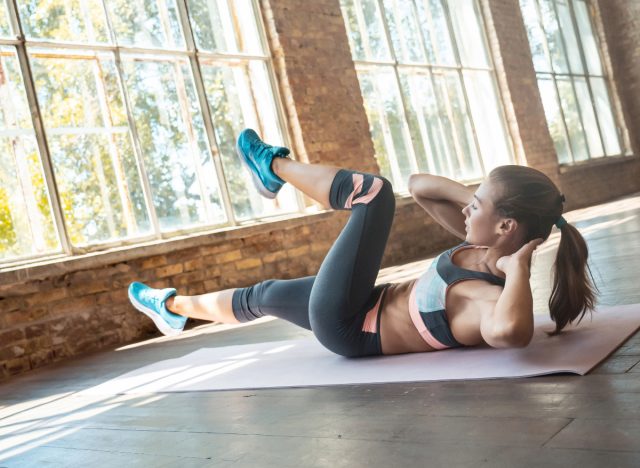
Seated Bicycle Crunches
- Begin seated toward the edge of the chair.
- Place your hands behind your head.
- Lean back slightly and pedal your legs as if riding a bike—lift your left knee and twist your right elbow toward it, then lift your right knee and twist your left elbow toward it.
- Continue to “pedal,” twisting your torso and bringing your opposite elbow toward the knee.
Seated Knee Tucks
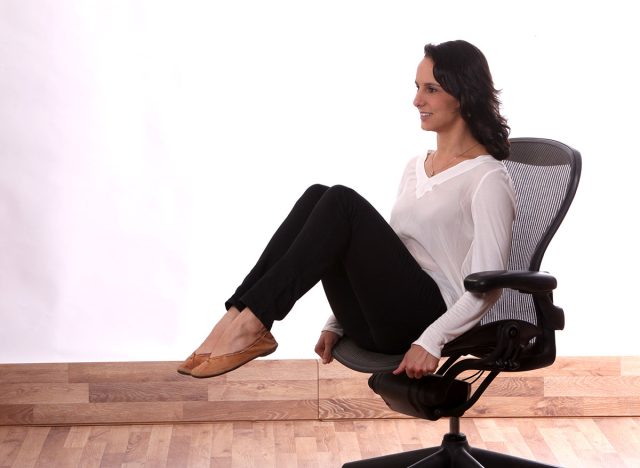
- Sit near the edge of a sturdy chair with your back straight.
- Place your hands at the base of your spine or near the small of your back to offer some assistance as you lift your knees.
- While leaning slightly back, pull both knees in toward your chest.
- Then, extend them back out to the start position with your feet hovering above the ground.
How Often To Perform Seated Exercises
For best results, Rivka recommends performing these exercises consistently, three to four times per week, ensuring you move through the full range of motion for each.
“Focusing on proper form and technique during each session maximizes muscle activation and minimizes injury risk; starting with lower repetitions and gradually increasing as strength improves is advisable,” Rivka adds. “Complementing these workouts with a balanced diet rich in whole foods—such as lean proteins, fruits, vegetables, whole grains, and healthy fats—is crucial for fueling the body and supporting muscle recovery. Additionally, incorporating other physical activities like walking, swimming, or light resistance training enhances overall fitness and aids in weight management.”
By following this well-rounded approach, you’ll build solid core strength, reduce belly fat, improve posture, and adopt a more active lifestyle well into your golden years.