4 Standing Exercises That Restore Upper Body Muscle Faster Than Weight Training After 50

Upper body muscle loss after 50 rarely comes from a lack of effort, it comes from how the body trains. Machines and isolated lifts remove posture, balance, and core involvement, allowing muscles to work without communicating with the rest of the body. That separation limits muscle reactivation and slows visible change.
Standing exercises reverse that problem immediately. When the body supports itself against gravity, the shoulders, arms, upper back, and core must fire together. This integrated demand sends a stronger signal to aging muscle tissue than seated or supported lifting, even with lighter resistance.
These four standing exercises restore upper body muscle by rebuilding tension, posture, and coordination at the same time. Performed consistently, they reawaken dormant fibers faster than traditional weight training because every rep requires full-body participation rather than isolated effort.
Standing Push Press Hold
This movement rebuilds pressing strength while forcing the shoulders and arms to stabilize the body upright. Holding the press at the top increases time under tension, demanding continuous muscle engagement rather than short bursts of effort. Standing posture prevents the shoulders from relying on back support, increasing muscle recruitment immediately.
As control improves, shoulder and arm tone return quickly because the muscles stay loaded longer per rep. The core’s involvement amplifies the training effect without increasing joint stress.
How to Do It
- Stand tall holding dumbbells or bands at shoulders
- Press arms overhead smoothly
- Hold briefly with elbows locked
- Lower slowly under control
Standing Row With Posture Lock
Upper back muscle loss accelerates when posture collapses. This standing row restores muscle by forcing the body to stay tall while the arms pull. Locking posture throughout the movement prevents momentum and shifts work directly into the lats, rear shoulders, and upper back.
Standing removes external support, increasing demand on stabilizing muscles that machines ignore. That demand accelerates muscle return and improves visible posture simultaneously.
How to Do It
- Stand holding bands or dumbbells
- Brace core and pull elbows back
- Squeeze shoulder blades firmly
- Return slowly without leaning
Standing Lateral Raise Pause
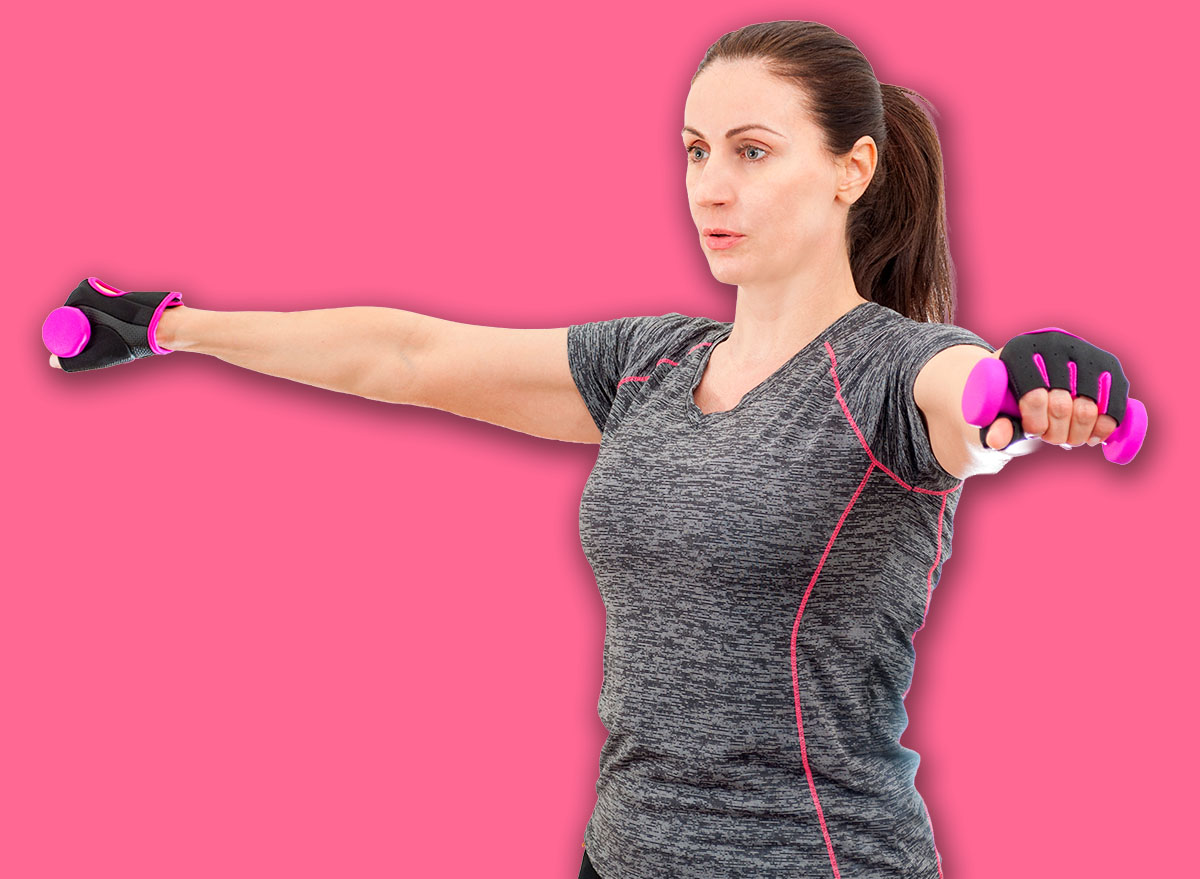
Shoulder muscle fades quickly after 50 when lifting becomes rushed or seated. This standing raise emphasizes control and balance, forcing the deltoids to work without assistance. Pausing at the top eliminates momentum and increases muscular tension where aging shoulders need it most.
Because the body remains upright, the arms work harder to stabilize each rep. That sustained effort restores shoulder shape faster than higher-volume machine work.
How to Do It
- Stand tall holding light weights
- Raise arms to shoulder height
- Pause briefly with control
- Lower slowly to sides
Standing Carry Hold With Reach
This movement rebuilds arm, shoulder, and upper back muscle through sustained load rather than repetition. Holding weight while reaching slightly forward forces the upper body to stabilize dynamically. The shoulders, arms, and trunk stay engaged continuously, creating a powerful muscle-restoring stimulus.
Standing carries teach muscles to stay active under load, a key factor in regaining tone and strength after 50 without heavy lifting.
How to Do It
- Hold weights at sides or chest
- Stand tall and brace core
- Reach one arm slightly forward
- Alternate reaches without losing posture