5 Standing Exercises Women Over 60 Should Do Daily to Restore Posture


I remember when my mother was taller than me. She was 5’5″, as I recall, and I’m 5’3″. She just celebrated her 70th birthday on Valentine’s Day this year. I didn’t notice it happening gradually, but now, when I stand next to her, it’s noticeable how much shorter she is than me.
After 60, the body changes in ways that quietly reshape how we stand. As a certified personal trainer and yoga instructor, I’ve seen how much of that decline can be slowed, and even reversed, with the right daily habits. The good news is you don’t need a gym or a floor routine to do it.
These five standing exercises take 10 to 15 minutes a day and can help you stand taller, breathe easier, and undo years of rounding.
Why Posture Breaks Down After 60
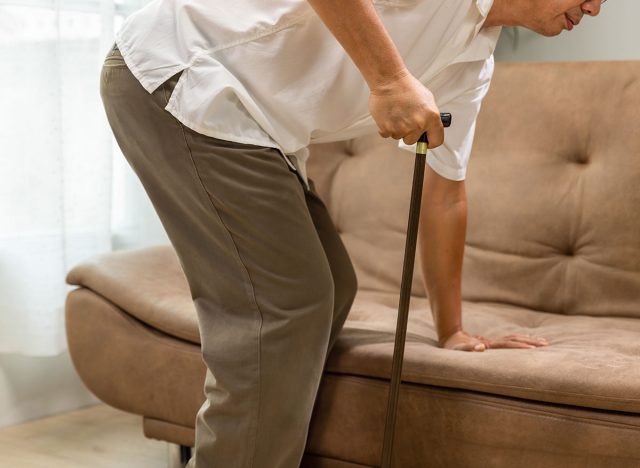
After the age of 60, we begin to lose muscle mass and strength at an accelerated rate due to sarcopenia. Women are even more at risk, as menopause causes a sharp drop in estrogen levels which contributes to lower bone density and a decline in collagen quality, affecting the vertebrae, ligaments, and discs of the spine.
This can accelerate osteoporosis, the loss of bone mass over time. Weakened back muscles combined with a decrease in spinal integrity can lead to a rounding of the upper back, called kyphosis.
Why Standing Work Matters

It matters that these exercises are performed while standing because that’s how most of our life happens. Unfortunately that is becoming less true with the increasing prevalence of a sedentary lifestyle, sitting at office jobs all week, binging Netflix all weekend, but that is to our detriment. To reverse or prevent poor posture, we must work against gravity, and that is best done standing tall.
There are lots of great floor and seated exercises that can help restore or reinforce good posture, but for many older adults, getting down and up off of the floor unassisted is not possible or risky. I chose standing exercises for this routine because you’ll get the maximum benefits from not just working the upper back muscles, but also the muscles of the legs and glutes.
Most of these exercises also utilize the support of a wall. Using the wall is a great way to improve your posture, as it gives you tactile feedback and promotes proper alignment.
Why Daily Repetition Works

We form movement patterns over a lifetime, day in and day out reinforcing the same habits. If you sit at a desk, hunched over every day, your body starts to conform to that shape. The muscles of the back weaken, the muscles of the chest tighten. The hip flexors get tighter and shorter, the glutes disengage. The neck leans forward, the shoulders round.
To shift back into alignment, it’s not enough to train the body a few times a week. Sure, that’s better than nothing, but to counteract a lifetime of less than perfect posture and the accelerating effects of aging, daily consistency is key. We aren’t just training the body during our workout, we are introducing new movement patterns to replace the old ones.
Band Pull-Apart
I actually use this exercise with most of my clients every day as a warm up. It targets posture specifically by strengthening the muscles that pull the shoulder blades back. This counteracts the tight chest and rounded shoulders of kyphosis.
Muscles Trained: Upper back, rear shoulders, shoulder blade stabilizers
How to Do It:
- Hold a resistance band out in front of you in both hands at shoulder height.
- Pull the band apart by squeezing your shoulder blades together; the band should move toward your chest.
- Slowly return to the starting position.
Common Mistakes to Avoid:
- Leaning backwards
- Shrugging the shoulders up toward the ears
- Bending the elbows
Recommended Sets and Reps: 2 to 3 sets of 10 to 12 reps, resting 30 to 45 seconds between sets.
Form Tip: If you’re unsure of your form, try standing with your back against a wall. This will ensure you don’t lean backward. Keep the back of your head against the wall and your shoulders down.
Easier: Use a lighter band or do the motion without resistance. More advanced: Pause for 2 to 3 seconds at the ending position.
Back of Head Press
I use this one in my yoga classes regularly. A common postural misalignment is the head jutting forward, caused by a weakening in the muscles of the back of the neck. Think of how someone looks when they are looking down at their phone all the time. This move also opens up the chest.
Muscles Trained: Deep neck muscles, upper back, chest (through extension)
How to Do It:
- Use a yoga block or a folded up towel, or simply interlace your fingers together and bring this to the back of your head, not your neck.
- Gently press the back of your head into the block, towel, or hands, keeping the chin slightly tucked.
- Hold for 5 to 10 seconds.
- Relax and repeat.
Common Mistakes to Avoid:
- Treating it like a backbend; you are not leaning back into your hands. It’s an isometric hold, the head pushing back into the hands and the hands pushing equally into the head.
- Arching the lower back
- Using too much force
Recommended Sets and Reps: 3 to 5 sets of 5 to 10 second holds, resting 15 to 30 seconds between sets.
Form Tip: Be sure your chin stays slightly tucked. Your back neck muscles should feel engaged, not compressed.
Easier: Use a soft towel instead of a block, or stand with your back against a wall and push your head into the towel against the wall if your arms get tired or can’t reach. Advanced: Hold up to 30 seconds.
Wall Squats With Stability Ball
When I train posture, I never neglect the glutes and core. This move strengthens the glutes while promoting an upright alignment of the spine. The support of the ball practically forces proper form.
Muscles Trained: Glutes, quadriceps, core
How to Do It:
- Place a stability ball between your lower back and the wall.
- Stand with your feet slightly forward and shoulder width apart.
- Slowly bend the knees to a squat position. Start with just a small quarter squat.
- Push through the heels to stand back up.
Common Mistakes to Avoid:
- Knees collapsing inward
- Leaning forward
- Going too deep into the squat
Recommended Sets and Reps: 2 to 3 sets of 10 to 12 reps, resting 30 to 45 seconds between sets.
Form Tip: If you look down, you should still be able to see your toes. The knees do not go past the toes, blocking them from view. Keep the chest lifted, the pelvis neutral, and the spine tall.
Easier: Keep it to the 45-degree bend or less. Advanced: Hold for a few seconds at the bottom of each squat, add a wall sit at the end of your set focusing on keeping the chest lifted and open, or hold a weight in your hands.
Hip Hinge
This move trains the whole posterior chain of the body, teaching proper hip mechanics.
Muscles Trained: Hamstrings, glutes, back, posterior chain
How to Do It:
- Stand with feet hip-width apart.
- Place hands on hips.
- Push hips straight back, letting the knees bend just slightly. Start with just a 45 degree angle.
- Keep spine long and the chest open.
- Squeeze your glutes to return to standing.
Common Mistakes to Avoid:
- Rounding the back
- Bending the knees too much; remember it isn’t a squat
- Craning the neck; keep your eye gaze a few feet in front of you on the floor
Recommended Sets and Reps: 2 to 3 sets of 8 to 10 reps, resting 30 to 45 seconds between sets.
Form Tip: Look in a mirror, standing sideways, and watch your form. Keep your spine neutral, no rounding, as you tip forward. Make sure your knees aren’t locked out. You should feel the tension in your hamstrings, not your lower back. I always say: You are strengthening your back, not straining it.
Easier: Step your feet wider apart if you feel unbalanced, and keep the hinge to just 45 degrees. I don’t recommend going much further than that. You may also find it easier with your glutes touching a wall behind you. Advanced: Add a kettlebell or dumbbell in your hands for a deadlift variation.
Wall Thoracic Extension
Finally, a great stretch after all that work. This move is used by physical therapists to restore mid-back mobility. It reminds me of the downward dog stretch I love so much in yoga class. It targets one of the main areas where we tend to lose flexibility as we age and the culprit of kyphosis: the thoracic spine.
Muscles Trained: Thoracic spine (mid-back mobility), lats
How to Do It:
- Stand facing a wall about 1 to 2 feet away.
- Place your hands on the wall at shoulder height.
- Walk your hands higher up the wall as you gently drop your chest toward the floor, pressing the hips slightly back, until you find a deep but pain-free stretch.
- Hold for 3 to 5 slow breaths.
- Return to upright position.
Common Mistakes to Avoid:
- Overarching the lower back. The lumbar spine tends to be more flexible than the thoracic spine, so tightness in the thoracic can cause the lumbar to take on more work than it should. Think about gently tucking the tailbone under and pulling the ribs in to stabilize the lower back.
- Pushing too aggressively; find a stretch where you can comfortably breathe.
Recommended Sets and Reps: 3 to 5 sets of 3 to 5 breaths, resting 15 to 30 seconds between sets.
Form Tip: Think about your chest melting toward the floor. Don’t overarch your lower back. You should feel the stretch in your upper back, and down into your lats.
Easier: Widen the hands apart more to free up your back if it’s especially tight. Advanced: Place the forearms or elbows on the wall instead of the hands, or even bend the elbows and bring your hands behind your head to deepen the stretch.
Your Daily Routine
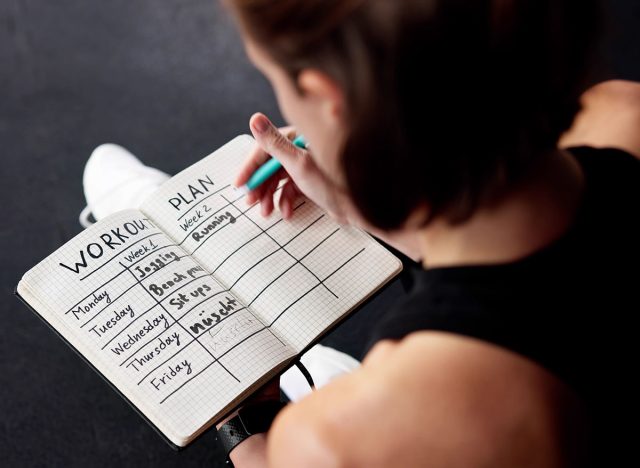
Do these five exercises in the order in which I presented them:
- Band Pull-Apart: 2 to 3 sets of 10 to 12 reps, resting 30 to 45 seconds between sets.
- Back of Head Press: 3 to 5 sets of 5 to 10 second holds, resting 15 to 30 seconds between sets.
- Wall Squats With Stability Ball: 2 to 3 sets of 10 to 12 reps, resting 30 to 45 seconds between sets.
- Hip Hinge: 2 to 3 sets of 8 to 10 reps, resting 30 to 45 seconds between sets.
- Wall Thoracic Extension: 3 to 5 sets of 3 to 5 breaths, resting 15 to 30 seconds between sets.
This routine should take 10 to 15 minutes to complete. Honestly, I think you’ll feel less neck pain, easier breathing, and a feeling of being taller immediately after completing this routine, but with daily consistency, the results will become permanent.
Habits That Undo Your Progress

Not to point fingers, but there is a particular gym-goer I know who comes to mind. Let’s call him Sam. I see Sam in the gym for hours almost every day. He must be in his 70s, and he is in fabulous shape. He runs, he lifts heavy weights, he does amazing walking lunges. However, I observe that he is probably spending 60% of his time at the gym on his phone, and when he is looking at his phone, his back is so rounded, his head jutted forward, his posture a complete mess. I can’t help but think that he is undoing so much of his hard work in the gym before he even leaves it.
One of my favorite yoga teachers described what she has observed as the “cashew-ization” of America. We spend so much time in our comfortable chairs or cozied up on our couches, we have become cashew-shaped. It’s my favorite nut, but I wouldn’t want to look like one.
Spending too much time hunched over our phones and becoming cashews on our couches are the two most common everyday habits that come to mind for me that undo our posture progress. Simple adjustments are to limit the time you spend on your phone. Sam should leave his phone in his locker; I know it’s too tempting to keep at hand. Limit your social media time. Don’t binge watch. Practice self-discipline and get up, stretch, and go for a walk. If you must work at a desk, consider a standing desk, or set a timer to remind you to get up and walk around for 5 minutes every hour.
When to Check With Your Doctor

Always consult with your physician before beginning any exercise program, especially if you have:
- Osteoporosis
- Hyperkyphosis due to spinal fractures or any spinal injuries
- Arthritis or osteoarthritis
- Increased fall risk or vertigo
- Hypertension or high blood pressure
- Shoulder injuries or rotator cuff issues